Monday, January 28, 2013

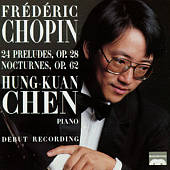
Hung-Kuan Chen (Piano): On Overcoming Hand Dystonia


I saw this absolutely amazing post on the Musician's With Dystonia Bulletin Forum. It's a PDF file, but doesn't require downloading. Hung-Kuan Chen, a pianist, speaks about his personal challenges with dystonia over the years, and how he eventually overcame it. I know I posted this under Q&A/Interview's even though it's a document that he posted himself on the forum. I posted the link below.


He approaches it very intelligently, and describes in detail why he chose a certain way of approaching his symptoms, and how. With so much respect for this man for sharing his wisdom and journey, I wanted to share it with you, as I feel it can benefit many.


Link: Hung-Kuan Chen (Piano): on Overcoming Hand Dystonia

I especially relate to the issue of overcoming the opposing muscle groups. Even though embouchure dystonia is much less understand than hand dystonia, I still find it similar in more ways than we think. He speaks about how the muscles are fighting for dominance, as there are different signals being sent to the hand, and how these signals overlap and cause tension/the contractions. He also talks about finding the threshold.

I immediately thought of the threshold being similar to how I find what I call the "leverage" area (I spoke a lot about this in my blog titled "Natural Release". I find the leverage area by finding the middle ground between the signals. I feel like the primary/dominant signals that are overlapping in my playing are not that difficult to point out; I feel like one of the many yet very dominant signals is trying to relax my embouchure from tensing up too much - to collapse it, and another dominant signal is trying to form a natural stabilized/functional embouchure but fighting the collapsing by stretching out too far and tensing up, and I can't seem to get a grasp on either one. It's like working with stubborn tissue, and any movement or attempt to form an embouchure is like touching an electric fence...it immediately causes bursts of spasms. As soon as I found my leverage, the contractions gave way slowly over time.

I had to first reduce the overall contractions by finding ways to relax them through anything I found that helped; buzzing, stretching, certain patterns, playing in the pedal register, etc. It wasn't an automatic release of the tension, it was more similar to massaging a knotted muscle over a period of months before the first layer of the knot gave way to the second. I kept working on reducing the overall contractions to a point where I finally could regain a tiny bit of sense or grasp over certain notes (usually just the tops of notes at first/skimming the surface). Then those certain notes helped me find my leverage...an area where I had reduced contractions, but could still maneuver enough to work my way into other notes, then registers, then patterns, etc....by slowly returning to those key areas every day and just touching upon them lightly.

My best analogy is; pretend you are going to try to pull your arm towards you like you're lifting a small weight. You try to pull your arm towards you, but the opposing muscle contraction instead fights it and tries to pull it away from you. In order to overcome this, you can't force your arm to pull towards you, it will cause more fighting/tension/contractions. Instead, you have to gently test the contractions. You stretch your arm/muscles, try to relax it, soak it in warm water, whatever relaxes it before you start to work on these contractions. Then you slowly pull your arm towards you just a tiny bit, and once the contractions happen, you release your arm. You keep doing this, just slowly pulling your arm towards you at tiny increments over time....every time the contractions happen, you release your arm, and eventually over time the contractions lesson as your body realizes what you are asking it to do. Pretty soon you are able to pull your arm towards you with less tension..the opposing muscle movement isn't nearly as dominant, and then eventually the movement of "pulling" towards you becomes the dominant signal to your brain. But it also takes even longer to learn how to pull your arm towards you with added weight, so you also have to learn carefully how to add weight slowly without regaining/causing tension to build again and take over....the added weight can easily trigger the body to overlap signals again by sensing that what you are doing causes possible strain. So with all this said, this is why it takes so long, many months or years to overcome this. It's like re-wiring your body, or how Hung-Kuan says, trying to undo the cluster of knotted wires that you might see on a computer...they are all knotted and sending various signals...you have to undo each and every knot with gentle movement and patience.

I feel like I've had to slowly rebuild every aspect of my playing through awareness and patience, and calmly listening to what my embouchure/body was telling me. It takes a lot of focus to become aware and intune with your dysfunctional embouchure. I feel like I've had to go from completely deprogramming my embouchure to slowly rebuilding it by navigating every movement through patient awareness.

The best way I can describe it is: imagine if you had a repetitive injury in your leg from running; the injury was so severe you had to quit running. You had to take time off, and heal. But then when you returned to running, things weren't the same. Your muscles were stiff and not working properly. One might say that in order to avoid the injury, you need not run again, but you actually do, but not right away...you would have to first stretch the muscles, relax them, move in slow motions, and then slowly work on rebuilding muscle endurance, and not rush things. Eventually you would get to a point where you could start speed-walking, or light jogging, but with much more awareness of your body and knowing when to not rush things. You would do all of this in order to properly regain your abilities in your leg. You wouldn't just jump head first into running miles upon miles, and hit the gym for 3 hours doing weights and laps, or try to use your leg like it's 100% stable as before.

This is the same with my embouchure dystonia. I once thought like many brass musician's are taught... to approach it like a normal player...like I had normal function. A lot of brass players will tell me or point out to me, "Your chin seems to have some bunching....your corners seem to collapse...I think this can be resolved through good breath support/air, and holding a stable embouchure formation." Farkas definitely influenced the way we look(ed) at embouchure form and function, but the problem with his concept was that it was to generalized of a view. It's not our fault as students we were never prepared to understand embouchure form and function beyond a book and pictures...there isn't a lot of studies on it as there should be, but that's definitely changing today. I really like Dr. Wilketone's blog because he analysis embouchure form and function unlike anyone else, and dedicates his time to studying it in motion. He shows observations of many things we can't see in a picture, and the various differences between different embouchure types.

SO the problem with Farkas's concept is that (1) if one wants a stabilized embouchure or in better words ...a functional embouchure, practicing holding one compared to a picture of another's is not realistic in the sense that an embouchure does not develop that way. If you want to have healthy strong arms to row a boat, you don't just sit there and hold your arm in a flexed position.....muscles develop through motion, and naturally develop best with time, rather than force/strain, and MOST importantly, they learn to function in a specific way depending on what you are doing (our muscle memory helps us to remember to move in specific ways as we develop, and our sensory helps our brains recognize what it feels like to do it). Embouchures develop through motion. Here is the (2) second problem,...everyone's embouchure functions differently, and not all are the same. There are some similarities among players, but there are also many who function severely different due to their facial build/makeup. (3) Air does NOT help a dysfunctional embouchure, especially if dystonic, it can make it worse. Don't get me wrong, breathing is good (if it's used as a warm-up/to focus ones self, or in prep-work like buzzing if it doesn't cause too much tension), but it can only come in handy when a certain level of function has been restored.
For example; In the beginning when my symptoms were severe, practicing long-tones made things worse and were out the of the question. Long-tones take a certain amount of muscle control, endurance, and abilities restored. Over a year later now, I finally am at a safe enough level to work on long-tones, and this also includes air. The dysfunctional embouchure can't focus and air stream, so the more air you try to blow through, the more it tenses up because it can't handle it. BOTH can cause more tension or strain on the muscles in the beginning. Light relaxed air via nose breaths or light intakes, combined with air-attacks/poofing in short durations was much safer and effective over a long period of time.

You can not approach a dysfunctional embouchure with such generalizations as "use more air", "work on holding that chin flat," "we must stop the movement in your face." Healthy normal embouchures take a while to develop over time, but dysfunctional ones take even longer to restore, and can be trickier, due to the fact that the pathway to recovery is not so simply summed up. The dysfunctional embouchure needs extra awareness, care, patience, and most of all TIME. It's not something you can develop through "lessons" every week....lessons require set goals, practice routines, pieces of music, technique-focus, and work/effort. Dysfunctional embouchures need to take it easy, they shouldn't play all the time, or every week, or have set requirements...they have a pathway to recovery of their own, and the only person best at understanding that pathway is usually the player themselves, as they can "feel" what's going on that no outsider can understand easily. That is why some injured/disordered/debilitated musician's chose not to work with anyone, or to not work with someone who hasn't ever been through the same thing.

Anywhoo, I'm rambling about my own experiences again! I wanted to explain how I related. The opposing muscle groups, the individual challenges/personalized process, and some areas/generalizations/techniques that cause more harm than help.

I hope you enjoy his article! It is truly amazing!!!

Wednesday, January 16, 2013

(Video) Rehabilitation Work: Very Important Elements On Recovering

This video was mainly suppose to show how I work on my most current symptoms, but I ended up also covering some key things that have helped me get to the place I am at now, having significantly reduced my embouchure dystonia symptoms. I decided on this title and used the word "recovering" because I am slowly but surely recovering. I've posted a lot of videos on my blog of me playing, and being able to look back and watch them compared to where I'm at...I see the small improvements gradually accumulate into big improvements.

Here is a link to the first video I made for my blog on December 29th, 2011.  Another video I did in June of 2012 I tried to show my full range of symptoms more accurately. You can see and hear how much more heavy they were in my playing. But as you can imagine, they weren't nearly as bad as the height of my symptoms in 2010 and early spring 201l when I struggled to get a sound out of my horn! That's how bad the contractions where...trying to blow air out and nothing happened but spasms!

I think this is one of my more well-planned out videos covering my playing. It was a great session, but definitely took a lot of endurance...ended up being 5 videos long! Auf'da!!

Part 1

Part 2

Part 3

Part 4

Part 5


There's some more comments I want to post right here, but will eventually update this post with them, as there are some things I left out that I forgot to mention too.

Sunday, January 13, 2013

Embouchure Change vs. Embouchure Adaptation


I was writing a reply to a post online earlier today (today is Jan. 20th, but I'm posting this under the 13th instead). I misread what they wrote.......:-S... now that I look back. The topic I thought they were talking about was a good one though! I still wrote a reply to something that I think is an important observation, even if that's not what the post's focus was. I wrote:

"I think that is a great observation (about the changes you feel in your embouchure)! I immediately thought... an embouchure change vs. an embouchure that HAS changed. I feel there is a difference though!... An embouchure change I usually think of mechanical....mechanical work....something intentional. Where an embouchure that HAS changed is something unintentional. 

I have heard of musician's who have developed embouchure dystonia-like symptoms after going through an embouchure change - meaning, changing the embouchure while it is still naturally set...intentionally changing what is natural. 


But an embouchure that HAS changed, is one that has done so on it's own... changed from it's former way/movements due to natural development, or from an injury, or from dystonia..something that was not intentional from one's own efforts.  


I feel like dystonia and/or an injury can cause an unintentional change (one out of our control), and this causes us to adapt to that change...so in a sense it is a change in how we re-wire the way we use our embouchure. I have heard of musician's overcoming embouchure dystonia through this adaptive change too (and it is something that has helped me recover a great deal of my abilities!). Some call it neuroplasticity or body mapping, but it is also in a sense or in general terms - an adaptive embouchure change...or even better worded... embouchure adaptation! 


Well, I just went on a rant! I was pondering about all this, and trying to find a way to explain how I feel there is a difference. I knew what you were trying to say, but it is hard to put in words how it is different than an embouchure change in a sense. When embouchure change is spoken, we typically think of - one that is intentional, for example; One that some students go through because their professor or teacher makes them."


As I was stating before that there is a difference between an embouchure change and adapting to a change of the embouchure. Some musician's that undergo an (intentional) embouchure change have been reported to have dystonia-like symptoms either a couple months afterwards or a couple years after one, and that the quivers/shakes are a result of the embouchure trying to resort to it's former function that existed before the embouchure change.

I believe this is similar to how a person with embouchure dystonia adapts to the (unintentional) changes/dysfunction over time...the body wants to re-wire the way the embouchure functions. The body knows how to restore function, but it takes time to not only re-develop (normal development already takes a lot of time, so 2x that with dystonia), but it's hard to listen to your body and understand how it wants to develop. With embouchure changes that required not too many changes from their previous form, it can be easier to restore sometimes; like a change in angle, or if they were a lower lip player who switched to upper lip. With dystonia however, it involves more than just adaptation and is very complex to work with, but it is still an important part of recovery!

With embouchure change, the symptoms are thought to be leaning more towards the body wanting to restore the previous way of doing things; the pre-existing function before the natural embouchure was changed . With dystonia though, any attempt to form an embouchure is very difficult. This is because the brain trying to piece together missing information from different areas of the brain to regain sensory/sensation and build new function...a new way to do things. The brain treats these messed up sensory signals as if permanent-damage was done, such as a blow to the head; it tries to piece the missing parts together and create new brain signals...to build a new map/representation so it can somehow function again. Except with dystonia, the missing parts are not due to a blow to the head, but due to the overlapping of sensory signals; they blur together and cause a malfunction, sending too many signals out...the agonist muscle activates while at the same time an antagonist muscles opposes it and they convulse/fight (in other words, you try to move your muscle, and an opposing one cuts it off ...resulting in contractions). You can see this really well in map representations of hand dystonia (the brain no longer senses the individual fingers...they become blurred).  That's my attempt at describing it best I can...not doing it justice though! :-S

I think whether you're dealing with a change to the embouchure unintentionally or intentionally, it is important to approach with this sense of awareness and intuition: to trust your own body, to respect natural development, to remember that your embouchure is a muscle and treat it with care, to be aware of your individual embouchure form and function, to study knowledge on embouchure form and function but be wary of misguided information/always keep an open mind and ponder things/also remember an embouchure is something that acts in motion (not a picture), and most of all....always think things through very seriously before you decide to do anything permanent to your embouchure.

I'll come back and edit this blog. I often write these blogs while thinking a million miles per hour, typing fast, with no regard for grammar or flow, and I repeat a lot of things. So will get around to that soon! 

Friday, January 11, 2013

(Video) Practice Session Jan. 10th 2013

Well! It's been a while since a video recording. Not very well planned out, but did my best to cover all the bases. My camera kept dying, so it cut off quite a bit of my playing at the end of each video. I think I did a really good job of showing the alleviation of symptoms over the course of my practice session, and though it's hard to explain how it physically happens, the improvement is definitely visible and audible if you pay close attention to when I'm working on my Low Db, and Gb, and even the movements in my face on the larger interval stuff evens out near the end and has improved a bit. :-) 

First part: Buzzing, Stretches, Chromatic Runs (descending) - Ironing Out Small Intervals

Part 2: Chromatic Runs (ascending) - Ironing Out Small Intervals. Octave Jumps...

Part 3: Octaves and Larger Intervals/Melodies

Sunday, December 30, 2012

Finding A Balance Between Tension And Relaxation


There was a point in time where I was talking about the importance of not avoiding my symptoms, but also trying to find ways to release tension in my face. I talked about finding a leverage point; a spot or setting on my face where I felt I could maneuver even just a little bit/have leverage even when the symptoms occurred. I didn't want to rely on an immobile collapsed embouchure, but I also didn't want to force a stabilized embouchure that looked stretched, I wanted to find a middle ground where I could have some type of leverage, yet work with my symptoms. This can be extremely difficult to find when dealing with dystonia. It helps to use a mirror, but even more just trying different settings and so forth to see what causes more spasms and what lessens them. Then once I found that spot, I usually found a pattern (i.e. 5 note chromatic, or scale, or low note pattern, or stretches) that helped relieve tension over time. Then once the tension had gone down I was able to rebuild sensory and movement/motion slowly back into my playing.

I felt during that point in time where I was seeking "leverage" was a very important transitional area of recovery. In the beginning I had nothing but tension in my face. I felt I could neither hold an embouchure position, nor do the opposite - relax it. So in the beginning I relied on playing on a collapsed embouchure...there was no other way I could steady my symptoms, and this was frustrating because a collapsed embouchure, though comfortable, did not offer any mobility, flexibility, I felt stuck in a ditch/mud and any movement away from that formation was like an electric fence shock.

But! The more I played on a collapsed embouchure, there had come a point where I felt my corner muscles were trying to transition more upwards instead of downwards frown/collapsed. My embouchure was in constant limbo for a while trying to move from a collapsed embouchure to a more stabilized "yet" relaxed position. I also can't stress enough that this happened naturally. I never tried to force my embouchure to be one way or the other. Recovery can NOT be forced, and believe me your body/embouchure will let you know, so it's just better to let things develop as they do and keep patience. I felt my embouchure was trying to do one or the other constantly, and sometimes I had to practice both ways - "today I feel like my muscles/embouchure wants to play less collapsed. My corners are wanting to go up, or one corner tends to." I know that sounds weird, but it is this awareness of how my muscles want to maneuver which became a key part of recovery (being aware of how my dysfunctional embouchure functioned). Another example is the change in angle of my mouthpiece. In the beginning I felt a very downward angle of the mouthpiece was comfortable, but over time this became more restricting and eventually I found myself playing less downward angled, and additionally also noticed this happened while my embouchure muscles regained their coordination and strength.

First I went from buzzing and freebuzzing to eventually playing on the horn again. Buzzing and freebuzzing helped me greatly because it is different than playing horn. I use my embouchure muscles, but there is a big enough difference in physical sensation that it allows my sensory a little more leeway. Then when I played horn, I started from a collapsed embouchure and slowly moved to a less collapsed looking embouchure with a different mouthpiece angle too; and this happened as my muscles slowly and naturally over time went from a more downward frown to a more steady support, and then the lower lip muscle started to change....I went from rolled out to more rolled in, and then somewhere in between kind of now. Then my chin muscle sensory came back, and I began to see it fluctuate between flat and bunched, and regained jaw flexibility (which is still a huge thing I'm working on right now - I feel like this is a huge area of recovery if I am to overcome it). I even felt the change in my upper lip too. I can't explain the sensations of "knowing" how I know/feel things are either working or not, or how I know if somethings changed, but I just do over time. Once you become more aware of your embouchure tendencies, you become sensitive to the changes that happen; even little changes like less of a twitch in the upper right side of the upper lip, or being able to grasp a note and dig deeper into it/bend it with air, or knowing when a spasm is going to happen.

For a long time I felt like things were so uncontrollable. I eventually went from guessing - "I'm not sure what's going to happen this time? I was doing good grabbing this note yesterday, but today it could be different," to "I know I can grab this note without contractions," or "This note is doable, but still has some tiny glitches to work out of it before I can grab fully hold the note out longer."

Sometimes I think I sound crazy when I write about the details of how my embouchure dystonia effects me. But it's just like anyone else who has a major physical change to their body or sensory....you have to think about things for once and notice things and be aware/sensitive.

I felt my recovery went from completely deprogramming my embouchure - playing on a collapsed embouchure, trying to relax my muscles as much as possible, to slowly reprogramming it - finding ways to keep strength, regain muscle coordination and new movement patterns after ironing out the spasms. How do you move your embouchure differently? Well I guess I listen to my body. An important thing to remember is don't let anyone tell you "HOW" your embouchure should look or feel when you have dystonia, your embouchure is basically shot right now  and also natural abilities shot...your body will tell you, and the reason it looks the way it does right now is because that's the closest setup that works for your embouchure as it develops.

This is slightly different for hornists who don't have embouchure dystonia. Though they can go through embouchure changes (a scary thing), and have natural abilities, they can get messed up physically if not careful, or if their teacher or professor requires an embouchure change to happen in a set limit of time or REQUIRE it. Though I believe knowledge on embouchure form and function is necessary for every brass musician, and also important to know when going through recovery/setback or an embouchure change; however, I REALLY don't like it when changes to a persons embouchure are not taken seriously (teachers forget that physical changes are PERMANENT, and forced movement/changes can be more damaging than helpful. Think of it like surgery; don't risk it if it's not a career-ending situation), or seen as a "fix", or as "necessary" because it looks abnormal ....I think that if a person wants to work on their embouchure, they need to take their time getting to know their own embouchure and it's tendencies, learn about form and function/knowledge of their anatomy/muslces and the different types of embouchures there are, and what their natural setting is, then slowly taking their time with building a healthy embouchure. It should be on their own time...and not rushed. Even if it takes years. I hate it when a teacher "requires" something like this, and ESPECIALLY if a student sounds great and doesn't struggle, yet they change their embouchure just because they think it looks weird.

It's a touchy subject. So word of advice, just stick to what your body is telling you to do...if you have to play on a bunched chin until your chin flattens out 12 years into playing, or have to take your time, so be it! I'd rather see someone playing comfortably and sounding great than knowing they are in physical pain or awkwardness trying to keep up their stamina with an embouchure that isn't natural fit to them, or forcing an embouchure change just to please their teacher.

Yes,
there are commonalities of good brass playing embouchure form and function; a flat chin, and relaxed yet firm corner muscles that leave flexibility in the upper lip, and  good breath support to resist damage/pressure....but if these are not common in your embouchure, don't force it. Take your time building a healthy embouchure, and don't force things or tell yourself there's something wrong with you, or that it MUST be achieved now...especially if you already feel what you are doing is natural and feels good and isn't harming you, don't mess with it. Don't fix it if it isn't broke. My phrase of my lifetime is, "KEEP IT NATURAL. TAKE IT EASY."

Am I trying to blame my dystonia on an embouchure change? No. But when I became injured I did avoid the signs my body was telling me. There were a lot of things that contributed to my injury, but I do think this lack of awareness of my embouchure was a key factor. Even when I was injured I did not like the thought of playing on a collapsed embouchure (as it kept collapsing on me ALL the time) because I had heard it was harmful...so I kept trying to force a stabilized embouchure (but it was more of a stretched one because I was forcing it) while I had little endurance left already, and hold it/tape it all together with pressure, so it hurt...and I believe this led to my muscle tear. I should have taken the drastic changes in my face as a sign that I was losing physical control/abilities fast.

It takes a long time to for the body to work out/allow that natural release of tension, and a lot of time to naturally rebuild more fluid/coordinated muscle movement without slipping back into tension. If you think about it, embouchure dystonia is like hand dystonia or writers cramp; you can only practice specific movements so long and repetitively in a certain way before it becomes too much of a strain on your body, especially if you don't get a break. I felt I never got long enough breaks, I also had a bad habit of practicing too much without breaks during that intense year, but then again, after being injured, I'm not sure any break would have helped in college, unless it was a long-term break...and I didn't get around to that until after I graduated.

Think about if you were a professional typewriter - you might practice typing fast all the time. Let's say you usually have good fluid movement that isn't cramped, but over time as you get older or during an especially intense season, you are overdoing it, and you realize the more you type, the more you feel that strain on your hand, but you kind of ignore it because it's not too noticeable. Then over time your hand movement changes to accommodate the tension, and you don't even realize it. Some people are able to recover from slight setbacks, and others it's more serious. Then lets say you get injured and this just adds to the extra strain, and all of a sudden your hand can't type without spasms and flexes. You don't know what's going on or how all of a sudden this all happened? It is a bit scary. But my point is to try to explain why that tension got there (it usually is because of a variety of contributing factors) is important to recognize, and that it is (like someone else very well put it) like an overexerted muscle. An overly used muscle. An overactive muscle! It should be viewed like this, as if you are an athlete, a master of fine delicate movement of a small group of muscles.

Anywhoo, the point of this blog was suppose to be about finding a balance between tension and relaxation. I feel once my embouchure finds this spot (and I still have to search for it on some notes), it is my doorway/point of focus in recovery. Like I said in my video; It's as if you want to flex your arm outwards away from you, but your involuntary muscle contractions cause it to flex inwards towards you. You can't FORCE your arm to move outwards because it will just cause the contractions to happen more violently and fight back more. So you have to EASE your way into it. You slowly push resistance against the contracting muscle by pushing outwards very gently and not pushing out very far, and then let your arm contract back inwards. Then you keep working on that until your body allows you to flex outwards a little more...and eventually...day after day, month after month, year after year, you're able to flex your arm outwards all the way and hold it there. Sometimes for a long time, and maybe there's a slight twitch in the muscle, but you've almost resolved it!!!"

That's how I feel about my embouchure dystonia and leverage. I find that leverage point where I can work both with the symptoms and against them. I'm able to test them, but gently, just by being aware of where/when they happen and finding that transitional area between tension and relaxation. Then there are external factors that also contribute to my well-being; such as taking vitamins, stretching, ice-packing, aleve, playing on my leg, playing on a comfortable mouthpiece, and also the specific exercises that I do that I find help relieve tension or help build coordination and strength back. All of it goes hand-in-hand. But I wanted to write about this awareness of the state inbetween tension and relaxation. It's a HUGE part of recovery to me.

Friday, September 14, 2012

Oven Mitten Sensory


Today I realized that some more sensory is coming back. Before I had dystonia, grasping onto a note was like a magnet grasping onto a metal bowling ball; and even could adjust the grip if I wanted. But with dystonia, it's like your hand in an oven mitten trying to grasp a bowling ball with no magnetic leeway.

In the past I've talked about how the sensations feel over time as I've regained sensory. At first it felt like I couldn't hold onto a note at all, it was worse than the oven mitten feeling....it was more like two magnets that repel each other/push away from one another. But fortunately I can say I am past that stage. More hopeful than ever, I'm now at a point where recently I noticed I can bend lower into the note or aim and hit the lower portion of a note. If you're into lip bending (I tell my students it should be renamed Airbending), you'll understand what I'm talking about, or if you understand the concept of finding the center of a note.

Non-dystonia suffer's have control over adjusting their grasp on a note. They can bend it up, bend it down (lip bending) by pushing air/resistance against it and adjusting it. The closest analogy I can think of is something the four hornsmen said which perfectly described it:

Imagine you have a tank of water, the further you try push your air through that water to go deeper, the more resistance you feel, but when you are just skimming the surface of the note their is less resistance, and also equally less resistance once you've bent a note too far and right on the edge of flipping the note. To find the center of the note, you push down into that water deeper, and when you hit the core of the note, it resonates. You can feel this, hear it, and even overtones if listening carefully....it fills the whole room and usually right on center pitch if you're playing with a strobe tuner. This isn't their word-for-word, so I'll probably have to find the piece of paper that I kept which explains it and put it on here. But this is the best way I can describe it.

For months on end I've only had grip over the top of the note...fluctuating between skimming the surface and grabbing onto the surface momentarily or for a couple seconds. As it's improved over time, the grasp has slowly gotten better...yet, it fluctuates, just as all my dystonia symptoms effect me - it can seem sporadic. However, today I felt I could hit the bottom of the note, and almost to the center, but not quite yet....but very close...and for a longer period of time.


Friday, September 7, 2012

Taking A Stand!

This is how I feel about the lovers outside my practice room...haha!

Wow!!! More progress to post about! It's been a month since I last wrote a blog post though. :-s It would be an understatement to say I've barely had time to tend to my blog lately. But I'm going to make an effort to at least once or twice a month until late Spring rolls around. Things have gotten very busy, but like I've said before, in a great way! I kind of promised myself I wouldn't teach this year because I wanted to focus on my college applications, but....I totally gave in. haha! I love teaching, and was so happy that I was asked to teach again. On top of a full-time job, teaching at school, college applications, trying to find time to hit the gym, and practice ...(and blog/record)...I was also asked to teach a couple more students at a nearby school.

Don't worry, I'll be exhausted, but a very happy exhausted person! :)

I'm going to try to record a video next week to get on here. Just within the last two weeks I've seen yet another long waited significant change!!...and that is.....*drum roll*....

....I'm able to stand up and play!!!!!!!!!!!!!!!!!!!

As you've seen in other posts, I've always heavily relied on playing with the bell on my leg while sitting down throughout this rehabilitation. But within the last 2 weeks while listening to my body (like I said before, it takes just following your gut feeling sometimes)...I felt the need to stand up and play because it seemed like playing on my leg was limiting the mobility of my face (if that makes sense). I just couldn't seem to get the mouthpiece to pivot like my body was asking it to do. I just thought "For some reason I feel if I stand up and play, it might be more comfortable and easier to play. I just need to stand up and see what happens."

...and I did! and it felt miraculous! I can tell there's still some work I need to get done while sitting down; I need to work out my kinks while sitting down before standing up; and even then, I need to test some things back and forth between sitting down and standing up. But otherwise, I have also noticed I'm able to play higher than normal because the shifts and pivots between my mouthpiece and embouchure are synchronized, and the pivots in my lower register where my dystonia effects me were more smooth. I don't know how to explain this....but what I'm talking about isn't AIR. Don't go there! ...yes air helps, but missing the primary point....what I felt in my embouchure and noticed in the mirror is what's important here.

I feel I'm now in the transition area between being able to adjust from playing on my leg to playing off my leg. Usually when sitting and playing with the bell on the leg, it helps with dystonia because the horn is stabilized...it doesn't move around and the angle of playing into the horn doesn't change much, so it's easier to adjust to the horn when having dystonia symptoms for some reason. You adjust to the horn sitting there...

...Whereas, when standing up and playing, the bell rests on right hand only, and your left arm adjusts the angle of the mouthpiece/leadpipe. In other words, the horn adjusts to you; you can adjust your horn to your body more easily. Though, it is this very free-moving mobility that makes dealing with the dystonia symptoms a lot harder to deal with while standing and playing or playing with the bell off the leg; because you need a target that isn't moving, or something you can try to adapt to since the horn definitely can't adapt to your dystonia symptoms right away; your embouchure barely knows how to function if not at all.

Working with dystonia is like trying to navigate a minefield sometimes. It's part of the retraining, I feel like I'm always searching for what works and what sets off the symptoms; in the beginning it was the slightest little movement (or anything I tried) that could set off the spasms and contractions, but now it takes more searching to find them, and some days not so much...I can sense the tension already on my relapse days, but takes 30 minutes to work out the kinks...give me an hour and a half, and I can regain some sense of normalcy in my playing.

Today I also was shocked, because I played my first effortless high Bb. Usually I don't ever venture up into my higher register because it causes way too much built up tension in my face, and then I have to spend another 20 minutes of just low playing patterns to reduce it after playing high for literally half-a-second.

Anywhoo, my embouchure felt really good today. I was standing up and playing, I started working my way up at first to the high F at the top of the staff (which is about as high as I usually get and stop),but then I felt a shift and saw a shift in the mirror.....the horn adjusted to my embouchure (again, I can't stress the importance of this brain-body connection!!! The rewiring is happening!!!) and I immediately felt things come out effortlessly as I went up to my high Bb. It was a feeling I haven't had in a VERY long time. So long, that I had forgotten how much I use to love playing high horn, and how comfortable/easy it use to be for me...without tension, without strain, without lack of endurance, without throbbing pain, without numbness, without instant swelling, without feeling like it would set me back in my retraining.

So I went for the high Bb, working my way up to it, and once I reached it, oh my god, it was so beautiful!!!!!! I almost cried. Sounds cheesy, but I honestly wanted to cry like a baby. I haven't played anything that high and beautiful in what feels like an eternity. I literally sat there and prayed "Thank you God, even if this is the last effortless note I'm ever able to play again. Have mercy on me. Thank you, thank you, thank youuuuuuuu!" I can't explain the feeling! I was so happy despite there being a couple directly in front of my practice room, lying on the floor in the hallway literally making-out and loudly saying sweet-nothings to each other (awkward is an understatement too)....I was happy! I stopped while things felt good in my embouchure and took off to lunch and work.

I had to write about it today, I was very happy!!!!! I believe I'll be able to play again someday. For now though, I'm preoccupied with teaching, applying to schools, working, hitting the gym, and usually practicing in my mute at home everyday (today I was lucky to find time to go to the University to play)! So, I'm sorry that I won't be on here as often, but definitely will try to write 2 blogs a month (3 if lucky!) when I get a chance. Thanks everyone for reading my update!!!!! Will post a video in a week or two! Tootles!!!!! :-)

Wednesday, August 8, 2012

Video Update On Current Progress (August 8th, 2012)

I wanted to make a video over the progress I've made so far. So here they are!!! Wanted to add that my current symptoms are not nearly as bad as they use to be. If you want to see more videos over my playing in the past, there are videos linked under "important blog posts" and under my "practice journals." I've come a long way and sound more like I'm bordering beginner/amateur horn player, than completely crippled like at the height of my symptoms long ago where I could barely buzz without tremors or where my symptoms stopped me from playing. Hope that you can see the difference from the last video I made over my symptoms (around 2 months ago on June 2nd 2012) compared to now, because I definitely can - even if subtle, it's a significant improvement to me!!!!


Tuesday, August 7, 2012

List of Practitioners


I wanted to write out a list of practitioners so that it may become a helpful resource to others who come across the blog. It's very important to know that they do not diagnose musician's with FTSED (except Dr. Frucht who is a neurologist listed on here, and Dr. Mcgrail a surgeon who has worked on muscle tears) or injuries, but primarily help as far as retraining and recovery after diagnosis.  Musicians who have embouchure dystonia or other embouchure problems/injuries don't have nearly as many direct resources as hand dystonia musicians do when it comes to seeking out someone to help guide them throughout the rehabilitation process. (If you are a person who has been diagnosed with hand dystonia and is looking for rehabilitators who specifically focus on hand dystonia recovery, please contact: Jerald Harscher. His website The Poised Guitarist can be found here: http://thepoisedguitarist.com/. He is a wonderful person  and guitarist who has helped many musicians with hand dystonia.)

I will have to come back and edit this....but I'll try to leave a brief description of the person/method when can, but don't want to go into too much detail, because it would be best to contact them and ask any questions about the help they can offer you; I can not do them justice. I am glad to see so many professional musicians that have aided those who have faced this disorder, or who can lend support to those who are having setbacks due to injuries or embouchure problems.

I wanted to start off with brass playing practitioners first. Though that's not to say they limit themselves to helping just brass players with FTSED, when many of them assist other types of instrumentalists too.
I'll start off with a list of the most recognized for their work with FTSED.
I also added some people who can provide more information on dystonia or other injuries, or point you in the right direction as far as finding a professional to properly diagnose you. Again, I'll come back and edit this...

For more information on common medical treatments for dystonia, please check out the DMRF page here: Dystonia Treatment Questions by DMRF

Jan Kagarice - Adjunct Professor of Trombone, University of North Texas
Jan uses a more holistic approach, one that addresses the overall well-being of the musician and covers many areas; physical, mental, emotional, psychological, brain pathways, etc. She has helped many types of instrumentalist, as well various embouchure problems and FTSED. She is very sought after, as she has a unique ability to help players who are experiencing performance difficulties. She attributes this to a combination of factors: her Montessori teaching experience, her study with Arnold Jacobs and her own struggle with neuromuscular disease. Jan currently serves as the chair of the International Trombone Association’s Committee on Focal Task Specific Dystonia and is an artist/clinician for the Conn-Selmer Instrument Company.

David Vining - Professor of Trombone, Northern Arizona University
David has successfully recovered from FTSED. He uses a more holistic approach I think, but has a lot of knowledge on brain/body-mapping, and addressing not only tension in the embouchure, but your body as a whole.

Laurie Frink - Trumpet Faculty, NYU Steinhardt  ....Unfortunately Laurie passed  away this year. We have lost a significant musician and person in this world. I will leave her information on here because it is still helpful to others and her work deserves to be recognized.
Laurie has been highly trained in Carmen Caruso Method, and does a lot of work involving calisthentics - preparing the body to play music. Focusing more on the process of developing into a musician through the act of making music vs. the act of just executing music. Rather than achieving set standards within a time limit or forcing improvement, she has a broader/well-rounded view on the overall development of a musician and preparing the body. She has helped many brass players with embouchure problems recover. Laurie and John McNeil wrote a calisthentic exercise book for trumpet called Flexus.

Janine Gaboury-sly - Associate Professor of Horn, Michigan State University. Has recovered from FTSED. She had also tried medication like Artane in the past too, but not sure if it helped in her recovery. She is a former student of Verne Reynolds. You can find her contact information here: https://www.msu.edu/~olsonc/JanineGaboury-Sly.html ....her colleague, trombonist Curtis Olsen  who is also a professor of music at Michigan State had lost his ability to play due to embouchure dystonia, though I'm not sure if he made a full recovery.

Dr. Peter Iltis - Professor of Kinesiology and Horn at Gordon College. Has FTSED, and made significant progress in overcoming it. He has published articles in the Horn Call over dystonia, as well he has some videos over dystonia which explain the neurology involved more in detail. If you click his name, the link leads you to a review of his video on Horn Matters Blog and another link to one of his videos.

Glen Estrin - Founder of Musicians with Dystonia through the Dystonia Medical Research Foundation
He has done the most outstanding work with the DMRF, being able to give musician's a place to go for guidance/direction, knowledge, support, and help with FTSED/FTSHD.
Dr. Frucht is a neurologist at the Columbia Presbyterian Medical Center, and has diagnosed many musicians with dystonia. He is also the co-founder of Musicians with Dystonia.

Lucinda Lewis - Principal Horn, New Jersey Symphony, and author of "Broken Embouchures," "Embouchure Rehabilitation," and her site dedicated to embouchure injuries: Embouchure.com. She is well known for her blocked-buzzing technique and exercises that she used to rehabilitate herself, and for her knowledge on different types of embouchure injuries. She studied at the Manhattan School of Music with Clarendon Van Norman, principal horn of the Metropolitan Opera Orchestra, and earned bachelor’s and master’s degrees in Music Performance. Lewis has served as principal horn of the Brooklyn Symphony, Chamber Opera Theatre in New York City, summer Chautauqua Festival Orchestra, Jerusalem Symphony, Israel Chamber Orchestra and Israel Philharmonic; she was appointed principal horn of the NJSO in 1977. She has been a soloist with the Brooklyn Symphony, Jerusalem Symphony and NJSO. Lewis has taught at the Rubin Academy in Jerusalem, Israel and Princeton University. She has been an officer and governing board member of the International Conference of Symphony and Opera Musicians since 1990.

Thomas Wilson - Trumpeter and conductor in Colorado Springs has helped some of my friends with embouchure problems and FTSED symptoms as well. Thomas Wilson is currently Music Director of the Chamber Orchestra of the Springs, Associate Conductor of the Colorado Springs Philharmonic, Cover Conductor for the New-York based pops show Symphonic Night at the Oscars, serves on the music faculties at Colorado College and the Colorado Springs Conservatory, and maintains an active guest conducting schedule. Mr. Wilson previously conducted for the Colorado Springs Youth Symphony program and founded the Young Concert Artists of Colorado Springs.Winner of international recognition as a trumpeter, Mr. Wilson has extensive experience performing, touring, and recording with orchestras, ensembles, and artists. He is one of only three trumpeters ever selected as a finalist for both the International Trumpet Guild Orchestral and Solo Performance Competitions in the same year. Thomas’ compositions and arrangements have been performed widely in the United States, Europe and Japan.

‎ Dr. Seth Fletcher - Senior Lecturer in Music, serves on the faculty at the University of Nebraska at Kearney where he teaches private low brass. Seth’s doctoral research regarding focal task-specific embouchure dystonia presented a comprehensive literature review and detailed case study, laying the groundwork for the further development of healthy pedagogical methods and philosophies.

Denver Dill - recently published his book over recovery from a muscle tear and surgery called Still Playing: My Journey Through Embouchure Surgery and Rehabilitation. Staff Sergeant Denver Dill, a bugler in the Hellcats, holds a Master of Music from the Juilliard School and was a doctoral candidate at the Eastman School of Music. Denver has risen to the highest level of trumpet playing, all the while battling the effects of a debilitating lip injury. While in high school, Denver began experiencing herniation, stretching and tearing of the obicularis oris, known to brass players as “broken embouchure.” Denver describes his complications as, "blood was coming out the end of my horn." After the acute injury healed, Denver resumed playing the trumpet, placing his mouthpiece slightly off to one side of his mouth. Throughout his undergraduate education, the center of his embouchure moved further and further away from the center of his lips. Denver compensated for the injury extremely well, not only winning several international trumpet competitions, but winning a position in the West Point Band. Over time, effects from the old injury began to hamper Denver's playing in ways for which he could no longer compensate. He went to West Point’s Keller Army Community Hospital and spoke with plastic surgeon and Deputy Commander of Clinical Services, Colonel Andrew Friedman, who was instrumental in enabling Denver to see the specialist Dr. Simon McGrail of the Scollard Clinic in Toronto, Canada. While Dr. McGrail conducted Denver’s surgery, West Point’s Dr. Friedman also accompanied Denver in the operating room to observe the intricate procedure. In fact, Dr. Friedman is now the only surgeron in the Armed Forces to offer the operation to other musicians in the military. In 2008, the New York Philharmonic celebrated twentieth-century composer Luciano Berio with several performances of his works, to include "Day of Berio" on February 2nd. Musicians from the New York Philharmonic performed all fourteen of Berio's Sequenzas. The fourteen Sequenzas are a series of virtuosic solo pieces. Sequenza X is for solo trumpet and piano resonance. The piano is played silently and certain strings are allowed to resonate when the trumpet plays loudly into the strings. Sequenza X makes ample use of extended techniques for the trumpet. Valve shakes, flutter tonguing, valve tremolos, hand stops and many other techniques are employed to get the widest possible array of timbres from the instrument. Sequenza X is over fourteen minutes in length and is one of the most physically taxing pieces in the trumpet repertoire. The Philharmonic's principal trumpet player, Phil Smith, asked Denver if he would join other principal players of the New York Philharmonic to perform the work as a part of its “Day of Berio.” Denver was able to accept the invitation because the surgery to repair his embouchure was a complete success. While the recovery was long, Denver says he is no longer hampered by the effects of the injury and is able to advance as a trumpet player both technically and musically....

...another trumpeter who has undergone surgery for a muscle tear is Brad Goode, a  jazz trumpet player who resides in Colorado. He also went to Dr. J Simon Mcgrail for surgery. I have a couple links on the sidebar over lip surgery done by Dr. Mcgrail.
Contact Information for Dr. Mcgrail: 91 Scollard Street, Toronto, on M5R1G4- Phone: (416) 926-7767. The esteemed Dr. Simon McGrail had been a pioneer in the field of facial cosmetic and reconstructive surgery for over 30 years. He has led the field in pioneering new surgical techniques, and is currently one of the only surgeons in the world that perform a specific reconstructive lip repair procedure. Dr. McGrail, brings his vast experience and tremendous surgical skills and passion for his work to the Scollard clinic. He was trained as a physician in Manchester, England, He completed Specialty and fellowship work in Otorhinolaryngology at the University at the University at Wayne County Hospital in Michigan. He completed further training in Facial Reconstructive Surgery along with exhaustive clinical research in areas ranging from Carcinoma of the nasal vestibule, Angeodema of the larynx and Orbital complications and Pathology. Because of his tremendous training and qualifications, Dr McGrail, was appointed Professor of Otolaryngology at the University of Toronto and subsequent Chief at the Wellesley Hospital. His specialty training and interest in Facial Cosmetic and Reconstructive surgery has put Dr. McGrail at the forefront of his field and led to such positions as: Physician to the Toronto Maple Leafs, Physician to Team Canada Hockey at the World Championships, and Founding Member of The Canadian Institute for Facial Plastic and Surgery, and Founding Member of The American Academy of Facial Plastic and Reconstructive Surgery. He has been consulted by numerous celebrities and people in the entertainment industry for his specialty knowledge in the area of vocal pathologies and surgical lip repair, namely Frank Sinatra, Phil Collins, tom Jones, Tony Bennett, Luciano Pavarotti, Placido Domingo, and Jim Cuddy of Blue Rodeo along with theatrical singers from various productions including the Lion King, The Phantom of the opera and the Canadian Opera Company. He is the leading authority on lip injuries in brass players. Not sure if this is his current contact info. I'm told that he is now in semi-retirement, in his office a few days a month.

Monday, July 16, 2012

Practice Journal: July 16th, 2012


One of my co-workers at work quit a couple weeks ago, so for the past 3 weeks I've been literally working over-time along with my other team members. Unfortunately I haven't had much time to blog, but I did have a great practice session today and got up early just so I could blog about it! I'm going to tag it under my practice journals.

I've noticed lately that I've been regaining control over my lower lip and chin muscles...and surprisingly I just realized how much of a huge impact they have over my playing. I guess I'm more wide-eyed because I naively always thought that my corner muscles were always the main muscle group being effected in my embouchure. But now I see that though my corners are the support, it's my chin muscles which give me flexibility, and my lower lip movement (rolling in/rolling out motion) has more freedom to flex if my chin muscles have the control to support it. Maybe this sounds crazy?

I guess what I'm trying to say is that I always felt like dystonia took away control in my upper lip and corners more, and even though I know it was effecting my chin muscles, that it effected my whole embouchure, I never realized how much control it took away from my chin muscles as well, because it's more visually noticeable than physically...until now where I finally feel the impact it's had as I regain control over this group of muscles.

So much of my progress has been sporadic in the past, for almost a year, until recently I've been having less re-lapses. I also noticed that my progress comes in layers, very gradually, and my symptoms reduced in a reversed order.

 For example: when I first started having dystonia symptoms it was subtle and just on my G and A, I started noticing air-leaks, then spasms started to creep in now and then, next I started to struggle with decrescendo's, then with playing soft, then with tonguing, and certain passages, and certain styles were more difficult too because it exposed my symptoms more (like Mozart's horn concerto's which had always been a favorite of mine and suddenly it became my worst nightmare), I started losing control of my larger movements (larger interval jumps and register changes/transitions), and pretty soon the spasms were more than noticeable, especially after I took time away from my horn (though I still think that's very important and absolutely necessary - taking time off, and pacing yourself), and also buzzing became difficult as well, and pretty soon I just struggled to grab onto a note or move or produce a sound....or even drink out of pop can! I even had to collapse my corners in order to drink out of a tin pop can or water bottle, it was such an odd sensation.

But when I started to recovery through rehabilitation the process went in the opposite order: First buzzing abilities came back, then it took a while to grab onto a note on my horn (I had to focus on the notes I could hold and work my way into others when could by adjusting or finding patterns), at first I could only play in my pedal register, then I worked my way into to low register, then middle register, then mid-to-high register (which is still very difficult for me endurance-wise). For a very very long time it was just learning how to reduce the spasms, and focusing on finding a comfortable spot that I could keep working on even if I had spasms...I was always searching for leverage. When I improved, it was very small steps, and slow and also every time I started working in a new register the progress in each register varied....of course it was much more difficult in my mid-to-low range. Gradually I learned how to grab a note, then articulate them through air-attacks, I found passages that worked for me, then I regained control over smaller motions (interval to interval; m2 to m2), then eventually it widened, then over slightly larger movements, and then different range transitions. As well it took a lot of slow practice, lots of patients, and I had to listen to my body....I couldn't do certain things until my muscles had regained some type of control over a long period of time; when my spasms reduced, then I saw my corner muscles improve and this helped me be able to work my way into different registers, then later my lower lip with transitions, and now....

....lately I've noticed my chin muscle control improving, as well my lower lip flexibility. When I look in the mirror and see and feel the flexibility I noticed this also helps support my corner muscles because it some-how evens out. I'm just listening to my body, and I though my chin muscles may not always flatten out or pull down all the time when I go lower, they do it a lot more than they use to...and it's not that I'm forcing them to either, it's that they naturally want to now for some reason....it's very weird when I notice these subtle changes, because most often it's as if your brain decides to cooperate and send the right signal to your face? You're lucky if it happens once, but to see it two times or three or four...then you know somethings giving way to a new re-wiring or improvement.

It's also one of my good days! However, I always look as everything as a step forward in a positive direction; the good days are the best days, and the re-lapse days are a sign that I've made improvement.....like someone else stated in the musician's with dystonia group, "You can't have a re-lapse without improvement!"

As well, it's important to not overwork yourself on those "good days", which can be easy to do....you get so excited to see improvement and pretty soon you can hear yourself thinking "Maybe just a little bit of Mahler"....nahhhh! haha...just joking, but it seriously is easy to push yourself too hard in the beginning, especially when you see improvement because you want to hold onto that good feeling, that sense of feeling and control you have for the time-being, and then you end up with more tension in your face and need to take a 3-4 days off of playing just doing stretches, resting, and ice-pack if swollen. However, like I said, rehabilitation takes a lot of patience and being very aware of your body and signs of tension.

My best example of what embouchure dystonia can be like is; imagine if someone injected a sticky substance like glue into your lips (but not a really hard type of glue, one that melts and hardens and melts), it makes your muscles stiff (like hardened glue) and your movements seem so difficult to adjust, and when you try to focus on holding a note that's when things are very unstable (like melted glue or something slippery) and you can't grab onto a note and your lips won't stop quivering or spasming  due to no stability, and when symptoms are at their peak/height you try to blow into your mouthpiece and can't produce a sound because it feels like your lips are glued together, and when you try to play a certain passage your tongue acts like it's been injected with Novocaine. It's like trying to go right and your brain sends you left...you try to articulate a low G, and you end up playing a completely different note or no note at all...your brain is sending mixed signals and you don't know why. Again, this is when dystonia is at it's worst, but it starts off very subtle, which is why it's hard to catch or know if you have dystonia. Mine started off as air-leaks and a bit of wobbles on and off in my low register, and it was fairly easy to cover up in the beginning when things weren't so bad, so it's easy to mistake it as technique issue that needs work on, when it was dystonia and something out of my control.

Anywhoo, I'm so happy to see the progress that is coming along, I can't wait to record my next video...someone had asked me to do a video where I show what my symptoms are like when I play through an etude or excerpt. I can understand why, because I haven't played anything melodic or solo examples in my videos, except just scales. So that will be posted soon, as well a video where I am playing into a transparent mouthpiece.

Woohoo!!! :-)

Also I was thinking, and maybe I'll write a blog over this, but my past attempts at rehabilitation were good, but not patient enough to see a full-recovery. Part of it was because I needed more time off for my injury to heal, but also I think part of it was because I lacked the patients I do now. Progress doesn't come in a day or a week, or a couple weeks, it comes in months, and in the beginning like many others I had unrealistic expectations and was a bit impatient sometimes. Patience is key! Not to rush things, and not to expect improvement over-night or for the progress you do make to stick around as long...re-lapses happen all the time in the beginning (ups and downs/very sporadic), it can be unbelievably frustrating, especially if a majority of your abilities use to be primarily naturally given. It's definitely been a long journey, and like many others I realize it's a change in life-style as well...you are forced to focus on rehabilitation as a journey, and as a very slow process, but enlightening as well. In a sense it has been a huge life-altering change for me, but also a blessing in some senses....I'm now much more pro-active about musician's injuries and trying to get others to treat themselves more like athletes within this profession. 

Wednesday, July 11, 2012

Additional Buzzing Exercises

This is an additional video I made and posted under my buzzing routine. I forgot to add these in there, so here's a 3rd video.


Wednesday, July 4, 2012

'Pops': About Farkas Embouchure

Dr. Philip Farkas

Happy 4th of July!!!!

I really wanted to re-post this on my blog, as I found it very interesting! I also love articles and sites I come across over embouchure function and/or types. Trumpet players seem to be studying the embouchure or are more interested in it than most horn players it seems (maybe that's just what I've witnessed as a horn player)...and though horn players are different than trumpet players, all embouchures have some similarities or commonalities in terms of basic function. I find what Pops wrote very interesting....here is a link to the actual site (I also posted it on my sidebar somewhere): 'Pops': Farkas Embouchure Is Self-Limiting

___________________________________

Date: Thu, 14 Jan 1999 23:20:04 -0600 (CST)
From: Bbtrumpet@webtv.net ('Pops')
Subject: Re: Farkas embouchure
Subject: Farkas is self limiting

I hope that we ALL know that Dr. Farkas was a French horn player (and a great one ). His work was the first serious attempt to discuss brass embouchures. And as a result of being the first by a man with a PHD it became THE college textbook for brass playing. That was a very logical thing at the time. However Dr. Farkas didn't play trumpet he had to rely on interviews of others. A lot of what he said is good however the Farkas is the most HALF taught embouchure there is. If you got 100 Farkas embouchure players in a room and asked questions like ' What is the main function of the mouthcorners in the register above high c? ' I would faint or die if 2 could give the answer. They move in toward the center to shorten the vibrating surface. The funny thing is it is in the book. So my main gripe is way don't teachers read what they teach.

Middle c takes twice as much lip resistance to fight the air as low c does. 2X low c
High c takes twice as much. 4x low c
Super c takes twice as much. 8X low c
Triple high c takes twice as much. 16X low c

The Farkas tends to be a self limiting embouchure because it requires the facial muscles to provide all of the resistance to the air stream. Not only is this TOO tiring to keep up, there is also a limit to how tight you can make the lips. Due to the time factor most people are stopped at a f or g. So they start using an embouchure shift. Some players push the tongue to the top of the mouth, adding  resistance before the air hits the lips. This thins out the sound. Some players add a lip curl to the lower lip. It helps a little. Some curl in the upper lip. By the time you do this now you are in a Stevens setting.

Think of this example:

       1. Take two pieces of paper hold them so that the top piece and the bottom piece touch but do not overlap. Now blow see how the paper ( lips) does nothing to resist the air. This is the Farkas embouchure. We are going to make the paper (lips) strong enough to resist the air.
      2. Take the same two pieces of paper and let the top overlap the bottom. Now blow . Again they offer no resistance. This is the Super chops / Screamin embouchure. If we put the mouthpiece in front then mouthpiece pressure WILL create resistance.
      3. Take the pieces and put them together so that they both curl out away from you. Now blow. Again there is no resistance. This is the Maggio embouchure. We will put the mouthpiece in the way to let mouthpiece pressure create resistance.
      4. Take the paper and put them together so that they curl in toward you. Now blow. There IS now built in resistance. It needs no mouthpiece pressure, or years and years of lip ups to build a mass of muscle. The air does the work for you.
Most people do not play in the super to triple c range because they depend on their mouth corners and mouthpiece pressure to create tension. All we want is to resist the air by rolling the lips in (slightly ) we create a one way valve. Only in this case we are blowing the air against the valve the wrong way. This causes a great deal of resistance with a very little tension. Therefore a super c is now played with high c tension and a lip curl in. ....
 
As for the dog whistle sound that is a bad application of an embouchure. That is controlled by the shape of the lip aperture. Apertures fall in 3 types. Flat causing a thin shrill sound. Oval causing the full sound we all seek. And Round causing a dull too dark sound. Aperture is controlled by the mouth corners. If they pull out from normal then it is flat. If they stay put or come in slightly it is oval. And if they draw in to make a fish face it is round. When you draw the corners to make a more rounded or oval aperture then you must use a little more vertical lip compression or the lips separate.

These aperture shapes as well as the size are completely controlled by the muscles forming the embouchure and are independent of tongue level. There was a study involving a floroscope machine done in the 60's that was published in the Instrumentalist. The arch of the tongue (tongue level ) can affect the direction of the airstream and certainally the airspeed but not the shape or size of the lip aperture.

Finally aperture size can be affected in two directions height and length. It is the ability to control the length that most people ignore. There are some remarkable results to be found here by those willing to work on this. Jake said it very simply "think of making a fist with your mouth". It draws in from all sides.

There are lots of people who play what WE call the Stevens embouchure. It was first written about in 1614.

It is outlined in books like:
" Prelude to brass playing " by Rafael Mendez
" The Psychology of cornet & trumpet playing " by Clyde Noble PHD
" The embouchure " by Maurice Porter
" The encyclopedia of the pivot system " by Dr. Don Reinhardt
" The trumpeters' handbook " by Roger Sherman

It is not mentioned by name in these books. However an inward lip curl is not part of the other embouchures and each of these books call for a lip curl in the setup.

 It is mentioned by name in these books:
"New approach to trumpet playing " J.H. Lynch
" The no nonsense trumpet from a - z. " by me
" Embouchure self-analysis & the Stevens - Costello triple c embouchure technique " by Dr. Roy Stevens
'Pops'

   A collection of some past posts & information about my book.
http://www.bbtrumpet.com/

Tuesday, June 26, 2012

Wilktone: Guess The Embouchure Type - Denver Dill


Link: Wilketone Blog: Guess The Embouchure Type - Denver Dill

I had to share this great blog post, the one I posted above! As I've said it many times before, I'll say it again...I love wilktone's blog. He has some spectacular videos over embouchure function; that show other people's embouchure types, and about embouchure dysfunction as well...it amazes me! I love it and think it's very important to know about and study embouchure form and function. He just posted a blog over a video of Denver Dill's embouchure. There should be a couple links on my sidebar about Denver Dill - he has written a book over his recovery from surgery done on a torn obicularis oris. Wilktone's blog shows a video of what Denver Dill's old embouchure setting use to be compared to the one he plays on now. It is very inspiring to see someone who has gone from injured to surgery then to fully recovered and then some! He sounds absolutely amazing!