Showing posts with label Emotional Coping. Show all posts
Showing posts with label Emotional Coping. Show all posts
Saturday, February 29, 2020
To Be Like Bamboo...
I don't think I have a spirit animal, but I do have a spirit plant. It's bamboo - as it is very strong, yet bends, making it capable of surviving immense hardship where most other mighty trees and plants would break. To me it signifies great strength and perseverance.
Sunday, December 15, 2019
Musicians Dystonia: Speak Out
We need more people who are willing to say, "I've been there, and I'm here. You can talk to me without judgement."
Thursday, November 21, 2019

Wednesday, November 20, 2019
Have No Fear and Embrace Life
"I am not afraid of difficulties. It is perhaps easier, and certainly safer, to follow a beaten path, but it is also dull, uninteresting and futile." --Dmitri Shostakovich
Monday, September 16, 2019

Mountain Reflection

"One day, the mountain that is in front of you will be so far behind you, it will barely be visible in the distance. But the person you become in learning to get over it? That will stay with you forever. And that is the point of the mountain."
~ Brianna Wiest
Art by: SpaceFrog
Blue Mountain Reflection
Wednesday, March 27, 2019

Tuesday, January 29, 2019
Return to Orchestral Playing

It definitely has been helping a lot! Granted I never could have handled this years ago, and I would never recommend playing in a group during the onset or height of dystonia. However, I find it majorly beneficial at this stage of recovery.
There was a time when I realized I had to get back into the swing of things, instead of just taking small gigs or subbing. However, it can seem like a journey in itself trying to find the right environment that supports you and willing to take an injured musician in. Most of the time I have to mention it afterwards and hope for the best, and if not, then it's not where I want or need to be in the first place.
The last big orchestra gig I did was in 2017 for the Longmont Symphony, which is an advanced and professional sounding orchestra. Therefore it was nerve-wracking at first, but oh boy, did I have sooooo much fun just being surrounded by players of that caliber and feeling alive again. I played 4th horn on Pines of Rome, Daphnis and Chloe, Strauss 4 Last Songs, and Elgar Variations.
However, my very first time playing in a group since 2010/diagnosis was while subbing for a horn player in a unique jazz-orchestra ensemble called All Angles Orchestra, created by a former classmate of mine (Michael Conrad) who happened to be the doctoral teaching assistant of jazz at UNC (Colorado) at the time. He's now a professor and won several awards for his compositions. I didn't expect him to reach out to me because it had been so long (we attended undergrad together in Iowa) and also because of my setback, but I was so happy he did. It really pushed me to take that first leap of faith.
It can be a bit scary every time you take a gig, or even just playing alongside others at first. It can also be physically taxing committing to a group on a weekly basis if you're not sure you are ready or playing more makes your symptoms worse. It really depends.
However, I think if you are optimistic and know your limitations very well of what you can handle or not, everything can be manageable. The relapse days can be brutal sometimes, but they don't happen as often anymore, and very rarely are they so severe that I become concerned.
I still get to play some decent repertoire; we had our christmas concert in December, and now started opera season and some other great pieces. I'm playing 2nd (but currently covering 4th this month) on the Firebird Suite, which is always fun to revisit on a different part, and playing a couple light pieces like La Gazza Ladra. I've always been a lead/principal player most of my life, and ever since the height of my dystonia back in 2010, I have been on 4th horn whenever I play in a group. That's not to say it's a bad thing, but it has taught me a lot and helped me also separate that ego from needing to be the best. All-in-all it has been an ongoing lesson.
I look forward to orchestra rehearsals every weekend! I LOVE it, very much. I forget how therapeutic it is and how much I need to be a part of a music group. Before I was either playing via demonstrating for students or having to play with them due to teaching. It's not the same as making music in an actual ensemble. Therefore, I never felt fulfilled to a certain degree.
I actually ran into a former CU-Boulder classmate who is a trumpet player, and also a bassoon player who use to volunteer to help out at concerts at the school I use to teach at for El Sistema. The conductor of this orchestra has a great sense of humor and I can tell it's a healthy environment.
I just recently watched a video where Dr. Farias discusses how one of the key components during the recovery process from any type of dystonia is re-introducing yourself to a former social environment or activity you use to do. It will greatly improve your wellbeing and facilitates the progress more than you would imagine.
I know that a lot of musician's with embouchure dystonia are not able to take this step for many reasons, or it can be just the mere fact that dystonia makes things so unpredictable and unstable at times.
Overall I am really proud of where I'm at and just taking my time trying to regain the last portion of my abilities. I feel as though I have about 70% of my abilities back, and on relapse days 60%. I know that's a weird figure...but I don't know how else to explain it.
I know a lot of people think, believe, or will tell you that embouchure dystonia is an absolute end to your dreams and career. The truth is that if you believe that B.S., it will do you nothing but harm and may even stop you from recovering at all.
Believing in a 100% recovery is half the battle. I seriously will not give up, even if I die trying. Even if I'm 90 years old and lost all my teeth...I'm not the quitting type, and the more the odds are stacked against me, the more fuel to my fire and determination to prove those out there wrong.
Anyways, I just wanted to share this moment in my life. It may seem like a small step, but small steps add up over time. I hope that it provides hope to others who may be afraid that they won't ever play among other musicians again, or even enjoy it.
That's all for now, have a wonderful day, and never give up on your recovery efforts! :-)

Saturday, December 8, 2018

Friday, December 7, 2018
Musician's Dystonia Malfunction....Not Today

#GameOn
Wednesday, February 14, 2018
Mantras
Just wanted to share my mantras in both Latin and English. These give me the greatest amount of inner strength no matter when or what I'm going through. I use them during meditation or when playing horn or in prayer. One of my biggest strengths is perseverance, and these mantras accurately reflect my mentality whenever encountering obstacles/life challenges. They resonate so well with me and I always keep them close to my heart. Happy Valentines day everyone, I hope these help your inner strength shine through as well.


Sunday, February 11, 2018
New Facebook Group and Forum for Musicians with Dystonia

Hi everyone! Just wanted to chime in and share 2 new groups/forums I created for musicians with dystonia on facebook! ....
- Musicians with Focal Dystonia & Neurologist Sharing Knowledge and Resources
......This group is for Musicians with FD and Neurologists. The group is focused on scientific-based knowledge, resources, case-studies, and to share personal trial/error done through scientific method of documentation and observation. This is not an emotional group or a place to advertise; no tolerating emotional lashing out or soliciting of cures (or the source of FD) without proper documentation, publication, and that it can be successfully applied to all. - Musicians with Focal Dystonia Emotional Support Group
........This group is for Musicians with FD, and focuses on leaning on each other and connecting with others who share the same struggle of coping with this disorder. Here we share our progress, relapses, and personal journey.
Hoping that these groups will provide additional support, connections, and resources! :-)
Monday, August 28, 2017
More Updates!
It's been a while since I've updated my blog! A lot has been happening so I'm mainly going to explain it all in photos!


First of all, I have posted a new video of my current horn playing on my facebook page Living with Embouchure Dystonia, and in the Focal Task Specific Embouchure Dystonia facebook group. You can see it here: https://www.facebook.com/embouchuredystonia/videos/1415994998449828/ . I filmed this at one of the music schools I teach at. I am warming up before my students arrive for the day.
I got to see an awesome friend, mentor, and professional horn player - Thomas Jostlein and his family again this summer! Like I've said in previous posts, I don't get to experience being in the horn playing world anymore since I'm not in an orchestra, and can't really speak to other horn players because I'm never around them. I can't explain how refreshing it is to speak to a horn player that doesn't look at me like an injured or diseased/cursed person, but instead still supports my success and boosts my confidence by reminding me that I can do it!...I can play and keep improving, and that what I am doing is good! Here are a few pictures from all the times we've got to catch up over the years.


I also got to meet Julie Landsman this year who is another huge inspiration to me. She said that she actually just recently donated to Dr. Itlis's Embouchure Dystonia research. It was great to hear her play with that beautiful gorgeous tone. Moved me and gave me so much inspiration.

I've started some artistic projects...check out all the drawings, wood stain art, wood burning art, and furniture refurbishing I've been up to:


This news doesn't necessarily have to do with me. But I wanted to post a picture of my twin sister. She had the opportunity to meet up with her former trumpet section this last year. Here is a photo with her former trumpet section mates: Philip and Natalie Dungey from Seattle. I am so proud of her and miss her trumpet playing! Ally and her husband have a photography business called Sweet Dahlia Photography which you can check out here: https://www.facebook.com/SweetDahliaPhoto/?pnref=lhc . They are based in Washington state and her husband also manages a music store and lesson studio! :-)

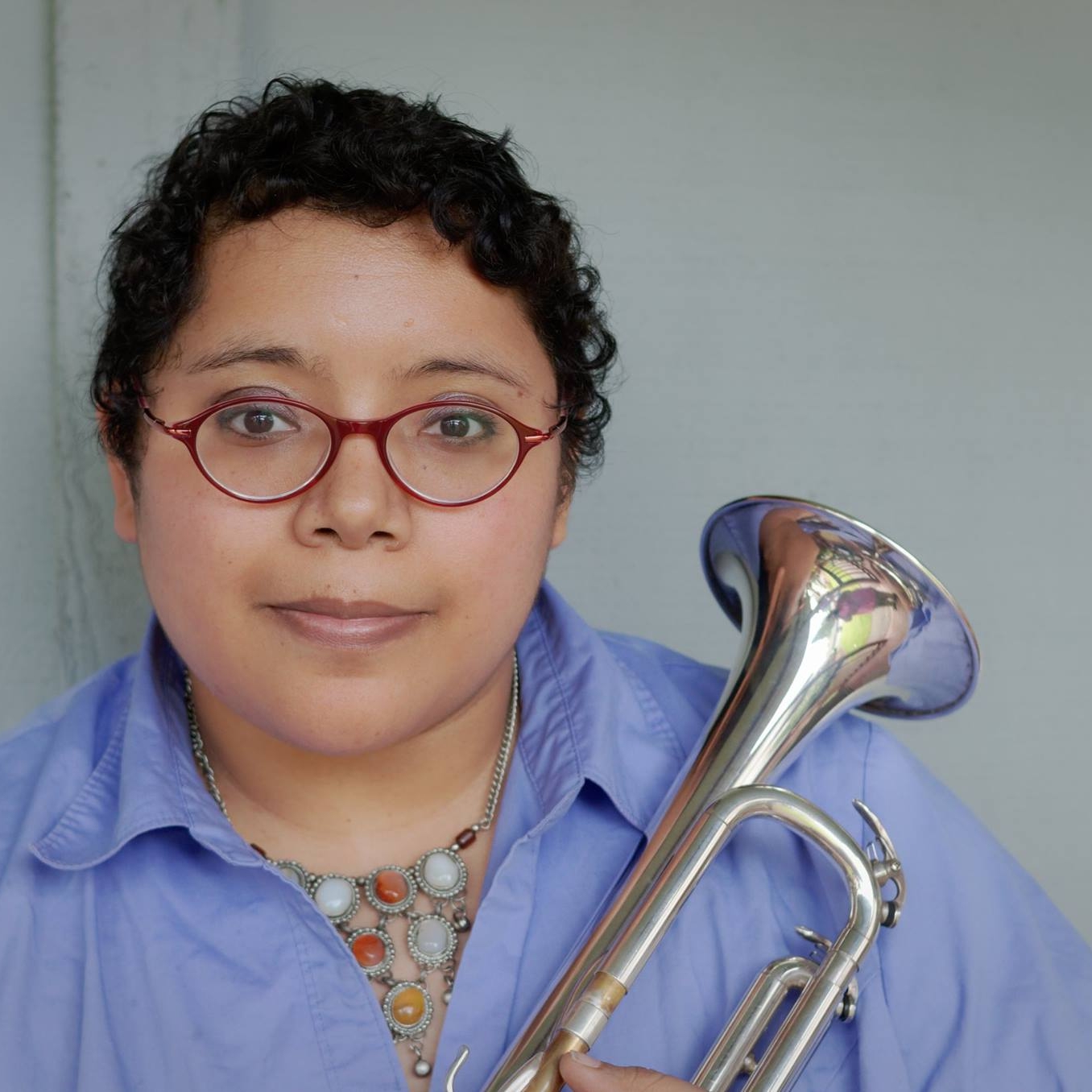
 |
| Example of Ally and Mario's photography work! :-) |
Finally, last but not least. I've started my private lesson teaching again, including several contracts with a handful of music schools around the metro area, so pretty much concentrating on doing it full-time this year and will see how it goes. I haven't completely given up teaching in public schools though...I also teach high brass at Douglas County High School/DC Downbeat band program a couple times a week!
I am looking forward to all the creative and artistic work I'm doing! Please keep sending positive energy our way. I will do my best to keep my blog updated, but am pretty busy!....until next time....happy 2017-2018! May everyone be blessed! :-)
I am looking forward to all the creative and artistic work I'm doing! Please keep sending positive energy our way. I will do my best to keep my blog updated, but am pretty busy!....until next time....happy 2017-2018! May everyone be blessed! :-)

Friday, September 16, 2016
Monthly Shared Article: Sax and Clarinet Player Tim Redpath on Embouchure Dystonia

Originally published in Clarinet & Saxophone Magazine (2013):
https://www.cassgb.org/features/post/musicians-dystonia-a-silent-plague/

Friday, July 31, 2015
Psychological Aspects of Recovery: Mental and Emotional Obstacles Faced with Musician's Dystonia (FTSED and FTSHD).

It is what I consider one of the 3 major stages of rehabilitation; (1) Educating oneself on the disorder, treatments, rehabilitation methods, other related injuries/areas, the body (movement and anatomy), and literally anything involving musician's health. (2) retraining the mind (psychological cognitive restructuring). (3) Rebuilding Neuro-pathways (Physical Rehabilitation).
These are my own opinions. However, it is safe to say that without a doubt anyone who has been marked with a major physical setback or injury naturally inherits emotional hurdles afterwards. As it takes a huge blow to ones self worth, it leaves us with doubts in our capabilities, dislike in our concept of sound, we start to over-analyze out of pure confusion and trying to fix what is going wrong with technique, and it leaves us overwhelmed and lost in the stages of grief. Sometimes we don't even realize that we are in grief or are in denial of it.
It is best to address the psychological aspects first and foremost before any musician tries to start physically rehabilitating. I believe they should be in a healthy frame of mind and emotionally stable. Many musicians who are hit with this disorder panic and want answers right away. They are very confused and don't want to accept the current state they are in. The only problem is that part of the answer IS embracing the current state. Mind you that embracing a temporary state/setback does not mean it defines you or that you're giving up. The disorder does not define who you are or who you will be. There is a difference.
Being diagnosed with what is considered a career-ending disorder is scary and devastating. It is hard to see the silver lining when it seems there are vague answers and not just one solution to overcoming it. It takes a great deal of courage and optimism to look at it in positive light, and no one is ready to do that until they've allowed themselves to grieve and face the possibility of their worst fears.
But I look at it as facing ones fears and saying, "Even though I believe I will beat this disorder, I'm not scared of the worst that could happen because here are the good things that can come out of it...." It's like facing your fear in order to overcome it. Once you experience it, it no longer holds a death grip on you.
I can already hear my musician friends saying, "What good could come out of this awful situation?" In order to come to that point, you have to go through the stages of grief. You must cry over the misfortune, get angry, yell, curse others, become bitter if you have to, go through highs and lows, desperately ask for help, ask "why me?"...whatever it takes to heal no matter how bad it feels. But then there comes a time where you do feel you have a choice; you can continue mourning or build up the courage and say, "I'm tired of being sad. I'm tired of hating the way I sound due to the spasms. I'm tired of fearing my instrument, being frustrated, confused, fearing the worst, and living like this in misery." Then you find the strength to fight. Once you are ready, there is a lot you must change about the way you think, and in a big picture type of way...

- The first and most important thing I have found is learning to separate your worth from the instrument and center yourself.
Having Dystonia allows us to focus on other areas of our lives that we didn't get to do while focused on performance. We have more time to build relationships, explore new areas, work on our health, study something we never got a chance to do. Some are too afraid to try to live again, to seek out something similar out of fear that it won't be the same.
We are literally brought back to the major question of "Why do we love our instrument so much? and where do our priorities fall? It also makes us question what is success? Did we love our success more than the music? Dystonia really grounds us and brings us back to why we love music. Success and failure are one and the same. There are no rewards/praise for success. The reward we found in music when younger was that feeling of exploration. We could make a million mistakes and still love the way we sounded. Yet the more advanced you become you lose that sense of exploration, creativity, curiousity, and unconditional love and acceptance of how one sounds.
- That leads me to the second thing. You must embrace the way you sound and love it.

Seeing other people play music, even small children, reminds me of what a tremendous blessing music is in this world. It's meant to be used as a form of expression whether or not it sounds good or bad...it has meaning and that is all that matters. Technique no longer matters, all the blabbering about breathing, hitting the notes, using articulation, etc. All that matters is embracing the love of music and letting go of the ego, the success, or judgement, and really appreciating what a gift it is to have music in the world. I imagine my feeling is similar to that of someone who has lost one of their senses like sight or hearing. We don't realize how truly miraculous something is until it is gone. We appreciate it more, aim to protect it, and love it in a way that is no longer criticizing, demanding, or taking it for granted as we did before.
I'm serious when I say I absolutely love hearing beginning band students play.
I believe that is the kind of love it takes; to embrace music with no judgement, or at least an appreciation for it that is much deeper than before.
- Third. Shift your focus from the performance mentality to relaxed awareness.

Performance mentality focuses on analyzing technique, physical agility, skills and accuracy. Relaxed awareness is what is needed instead. Focusing on embracing the symptoms, getting to know when they happen, looking at them with curiosity, exploring ways to lessen them through adjustments and modifications.It seems pretty simplistic and basic, but it works if you have patience and don't rush the process of recovery.
Though this may sound odd, there are some other things I did to help embrace my dystonia sound; telling my horn thank you and that I loved it no matter how it sounded, recording myself and listening to it with love, sympathy, and curiosity. Also practicing mantras, visualizations, building self-esteem, and treating myself like a survivor and not a victim were other major factors in changing my state of mind. Also farther down the road I liked listening to recordings of the horn before I fell asleep and visualized that my playing felt just as smooth and effortless. Pretty soon I started having vivid dreams about playing easily and this boosted my energy and happiness the more it occurred.
I started off practicing in a practice room with a piece of paper over the window. As I got more comfortable with accepting my sound, I removed the paper. Eventually I moved into a larger classroom, and then a stage. I adapted myself so that I did not fear the way I sounded in front of others. Whenever the thought that someone might be judging me popped up I would tell myself, "They are not judging me, I must be judging myself harshly to assume so. Even if they are, they do not know what they are doing. If they are, I feel sorry that they have been brainwashed to look down so shallowly on the act of making music which is a beautiful thing. I must remember I am now at a higher state of mind than what I had before and I love the way I sound no matter what. I must let go of the inner critic. I love myself. I love my sound. I accept it."
- This leads me to the fourth thing that I have learned. It is important to surround yourself with people and environments that help promote a healthy state of mind.
My students never judged the way I sounded and instead thought it was the best thing on earth. It reminded me of how children are much more centered (mentally and emotionally) than adults can be. They are in that state of daydreaming and imagination all the time. I am happy to influence them in a positive way and help them find balance in not only their abilities, but way of thinking/approach too. It was much healthier for me to be around children with this state of mind than performing in a group full of adults that are way too hard on themselves and others.
Instead, surround yourself with a network of people who understand; whether it be the musician's dystonia group on facebook, write or visit with other musicians from the group or who you've come across online with dystonia, lean on a supportive teacher/mentor, etc. If you feel comfortable with talking to me, then by all means call me or message me if you need to. It's the least I can do for others.
If can, speak out about your dystonia. It is oddly relieving. Not everyone is comfortable with that, but for me it is a way of healing. Knowing that I am informing others (non-dystonic people) about this disorder that is rarely spoken of, makes me feel like I'm not wallowing in pain while keeping my mouth shut. I want others to know so that some day others who are in the same boat won't feel as alone or outcast. Yet, I always speak positively of it; never victimizing myself, but instead aim to promote awareness and understanding of the disorder.
I know this is not how everyone feels, but I believe that my dystonia was meant to happen for a reason. I may not understand the reason, but I choose to believe that it is because I am strong enough to handle it and navigate the tremendous loss, and that I am to help others and promote awareness about this disorder. I believe that what I'm experiencing is unique and it is rare to see anyone share their experiences about this disorder, so it must be done for the sake of healing and helping. I see a lot of injured musicians do this, and it makes me happy to see them channeling their love and support to others in need before themselves. This leads me to the importance of belief or hope....
- Last, but not least. Do your best to find the silver lining and say it out loud.
Creating some strong beliefs in yourself and your recovery will carry you further and support you when things get tough. When you are able to find the silver lining...even if it's not something you necessarily completely 100% believe yet...say it out loud no matter what. It could be something as simple as, "Maybe not today. But tomorrow." or "Can't have progress without some relapses." I always say it out loud, whisper it, or say it to myself in a mirror because it somehow feels more grounded and reassuring. I know I sound crazy for doing such things, but it makes a difference and that is all that matters. Whatever gives you strength, believe in it and hold onto it....not matter how ridiculous it may seem, look, or sound to others.
The psychological aspects of recovery are a huge obstacle to overcome! It is probably the most difficult part of rehabilitation. I see these psychological aspects as a very heavy fog that blinds us from the physical obstacles beyond that. Once the fog is lifted you can focus on the dystonic symptoms and alleviate them through physical therapy and rebuilding the neuro-pathways slowly over time. But first and foremost you have to be willing to embrace what is right in front of you and keep tremendous patience. Not everyone is ready to do that or needs help with it. Some good options to help find what centers you is meditation, hypnosis, or it could be something spiritual or religious like going to church, it could even be helping others...whatever allows you to reflect inwards and face the grief at your own pace and allows you to think about a meaningful purpose of this experience. The good news is that you will see progress without a doubt, and time really does heal both the mind, body, and soul.
Thursday, July 23, 2015
Good Times: Friends, Horn Players, Traveling, and TENS unit therapy!

Back to the positive stuff! A fellow FTSED musician lent me their TENS unit to use! My neuromuscular dentist wanted me to undergo several sessions of using the TENS unit since it showed signs of improvement, yet I couldn't afford it. I'm literally a broke college student again. Boy am I grateful for this generous person to let me borrow their unit!!! It's helped tremendously. I'm already experiencing less pain. Even when the pain does happen it goes away quicker. I just have to make sure that I keep up the ice/heat packing and the TENS unit consistently especially after practicing.
They lent me four electric pads, so I've been using it on my face and my back shoulder and neck. My jaw is popping less, but still just enough to keep me worried. However, I have to say that my jaw feels more sticky in a good way...before I felt like it would pop or crack so easily by the slightest touch, and now it doesn't feel as loose or crackly or off. It's weird, the more I use the TENS unit along the line of my shoulder blade in my back, the more relieved I feel.

Another risk I'm taking is bringing back slight playing into my daily activities. My friend Thomas Jostlein the associate principal of the St. Louis Symphony is here in Boulder for the CMF festival and wanted to see where I was at playing-wise with my disorder. I'm VERY picky about who I play for because it requires a deeper understanding of the complexity of what I'm dealing with (a combination of injuries and disorder), and also an unorthodox approach vs standard lesson approach when giving advice or suggestions. But I trust him as a mentor.
The best thing is that I feel like I've contacted my inner horn geek again...which I've missed a lot! hahaha! It's therapeutic in a way feeling like I'm included in the horn playing world even if it's just talking to another horn player. Even better, one who isn't afraid of my disorder and is genuinely interested.
Many years ago when starting my (horn performance) grad school audition process by visiting campuses, the University of Illinois (Champagne-Urbana) was on my scheduled list. After visiting Thomas, I realized I favored his horn pedagogy and approach to music best out of any other schools, so U of IL became my top choice for schools to apply for. I liked that he wasn't like other typical professors; lost in technique or standard methods of solving playing issues, nor taught by the textbook....he had a unique and innovative approach due to his former teacher, Arnold Jacobs' influence. However, grad school on horn never happened due to my injury and then disorder. However, I consider him one of the best horn players of our time (if you haven't heard him, you need to...he really needs to make a solo recording), so it means a lot knowing he believes that I'll make a full recovery and has been supportive of all the hard work I've done to rehabilitate.
I also had some of my closest friends in Colorado this summer! I went and visited my friend James at the Aspen music festival. He use to play principal clarinet in the orchestra I was in, and we played in a woodwind quintet together. My best friend Lizzie, also from my undergrad, visited me in Denver. She's working on promoting her artwork and trying to make it as a solo artist. I know she will because she has such a diverse set of skills!


Music has always provided the family, support, and sense of purpose I strived for and needed. Even if I could play, it wouldn't mean as much if I didn't have others to share my pursuit of music with. I miss performing with friends, people that I love, and sharing good memories. No, the performance world is not always pretty, there can be drama, but in the end when I look back, it's my friends I miss the most. I proudly watch them grow into professional musicians, already establishing their names and professions. And while I wish I could share in the same things, I can't complain too much....it brings me tremendous joy seeing them shine and accomplish their dreams.
On a completely different note and change of subject, I'm in a committed relationship; something that is a huge milestone. It's taken a lot of courage on my part, but so far I feel like my heart has healed a lot and I'm ready to see the world through a more positive lens again and embrace whatever comes my way without fear.
I'm still learning how to let go of control and to not fear the worst, but I've come a long ways since then. In a way I felt like all these wonderful reunions with musicians I admire and friends I care deeply about, was a gift from God as a reminder of who I am, that everything that's happened in the past, all that I've accomplished, the gift of music I was given....it wasn't all for nothing, and it really did happen. I really could play. Just when I thought the former me was dead and gone, I was reminded that passion and fire inside is still alive. I just needed a jolt to wake me up again. I honestly haven't felt this alive in a very long time, and I'm grateful for it. I can daydream about the future and look forward to every day with the faith that my talent and skills will serve a purpose again.
Wednesday, June 3, 2015
31st Birthday Blog!

This summer I am working on writing an article over FTSED, and a lecture/presentation to give at possible conferences this coming year. It is a lot to undertake and a bit overwhelming because I'm of course not a medical professional, but just a musician who can only share their experience with FTSED. However, I think it is important to not only make others aware of injuries through writing...but to speak about FTSED, music performance-related injuries, and resources out loud. It needs to be brought up not just at conferences, but around peers, and especially in schools where advanced musicians are training.
On a personal note, I have unfortunately experienced a lack of motivation to write lately, mainly because of my recent diagnosis of TMJ. The fact that I have another hurdle to overcome makes me frustrated. I don't know whether or not the TMJ is a result of trying to rehabilitate on my horn with a dysfunctional embouchure for the last couple years, OR if it has always been an underlying issue creeping up on me overtime and caused the damage and dystonia.
At least when I was dealing with my nerves flaring up and my dystonia symptoms setting off, I could manage it and still play/rehabilitate. But with TMJ now it's almost impossible to play my horn due to overwhelming pain, or even try...and that is what has thrown me into this slump. I still have hope that someway, somehow, I'll be able to afford medical care later on (probably not until I graduate) and get the jaw splint/guard.
Despite feeling down I have a lot to look forward to! One of my favorite professional horn players will be in Boulder playing principal horn with the Colorado Music Festival. During my undergraduate studies I had planned on going on to study with him for graduate school while he was teaching in Illinois at the time. However, I ended up with dystonia, and he ended up taking a job with an orchestra. So we haven't seen each other since 2010!
I think being around a horn player that I admire so much will be therapeutic for me and remind me of my roots and bring back some life to me. With FTSED, after so long of not playing with a group or being able to play your instrument, you begin to forget who you were...it's almost like a long lost memory...but every now-and-then, that passion that you felt for your instrument comes back at unpredictable times (at times it can be a happy feeling, and other times a sad feeling); it could happen while sitting at a coffee shop and your favorite horn concerto comes on the radio. Or when I am walking to a class and hear an orchestra rehearsing in a concert hall, or coming across an old photo of myself playing horn.
I've been missing horn playing more and more lately. I do feel no matter how much progress you make in rehabilitation, you go through not only physical relapses, but emotional too, but they become less intense over time. For instance, right now I am feeling down, but it is a bittersweet feeling. I am glad to look back on the past, but I am not devastated over it...just like missing a loved one...you think of all the good memories and think, "I sure do miss them, but I know they're still here with me in the little moments like this." I still hold faith all these years later that I will beat this embouchure dystonia!
Not to get off track. I'm also working out a lot this summer. Time to get in shape! I started a new job not long ago and am still involved in concierge work. I can't explain how much this area of work has helped me to get where I am today...even if it's not what I love, I do enjoy it and getting to know the people who travel through. I also have one year left at CU and I've worked SO HARD, I can't wait to graduate!!!
If anyone wants to share any links of interest related to performing arts related injuries, please feel free to comment or send me an e-mail. I'll gladly share! Thank you again for all those who have kept up with me over the years, and I will write more soon.
- Katie
Friday, December 27, 2013
Finding Strength

I
refuse to believe there is no possibility or chance of overcoming embouchure
dystonia. There is nothing that can waiver my willpower, determination, and
patience. No one can stand in my way. I know without a doubt that something
once so natural cannot be lost forever when my muscles still possess natural
abilities outside of playing. It is a paradoxical mystery as to why only very
specific movements trigger it, yet the muscles can still function naturally
when at rest. There is a way to return function or eliminate the triggers.
I
don't know how I know, but I know THERE IS a way to reverse it. I know it in my
gut and soul that this observation of contradictory therein lies an answer
hidden somewhere, and that's what gives me strength. It's ultimate faith that
what is considered impossible is possible due to that extra space of grey area
and a question mark lingering.
I
refuse to believe the only thing that exists is a dead end with no hope when
the answer is at the tip of ones tongue constantly, and hints at the
possibility of freedom from the disorder through glimpses or moments of
normalcy after so much hard work and effort accomplished.
Most
people who are diagnosed with FTSHD (Hand Dystonia) or FTSED (Embouchure
Dystonia) ask, "How could my abilities degrade to such a state when I use
to be able to play so naturally with ease and nothing wrong?" when the question should be, "Why should
I believe my dystonia is irreversible when normal function still exists in my
muscles outside of playing?" Not all is lost when muscle function still
exists.
If
the possibility of all muscle function is to be completely thrown out the
window into the realm of never returning, then I would not be able to use all
of my muscle capabilities in my face; I would not be able to eat, not be able
to speak, not be able to form a natural smile, not be able to whistle, not be
able to do other related tasks or parallel motions. Yet, I still can perform
other tasks with the muscles and movement in my face...so why is it not
possible to restore function when it comes to horn playing? As long as there is
that grey area, as long as my muscles function normally outside of playing, not
all is lost...there has to be...there MUST be...there IS a way of restoring normalcy.
I just know it! I refuse to let my strength and faith waiver!!
Sunday, August 11, 2013

Sunday, April 7, 2013
Hope
Subscribe to:
Posts (Atom)