Showing posts with label Recovered Musician's With Dystonia. Show all posts
Showing posts with label Recovered Musician's With Dystonia. Show all posts
Tuesday, November 12, 2019
Musicians Well: Flautist Julianna Nickel on Focal Dystonia and Brain Surgery
So happy to see you featured Julianna Nickel!!! What I have always looked up to most about you is your straightforwardness when it comes to pointing out the truth/facts about focal dystonia, and for always seeing both sides of an issue clearly. Thank you for continuing to share your journey! 🎶💕
Thursday, October 17, 2019
Pianist Andreas Eggertsberger Latest Album: "Dystonia"
Congratulations Andreas!!! You sound superb!! Excited your album Dystonia releases tomorrow. First of its kind ever and immensely needed. You give so many hope! Much #respect 🙇🙌🙏🎶🎹
Here is a review of his album: https://www.pizzicato.lu/andreas-eggertsberger-schubert-und-schumann-spontan-und-empfindsam/?fbclid=IwAR3hNVNmKH44-Y5U6l26RkgVWn52Q7OgttZni5umrhmFmRHLAMDHdHguWZA
Monday, October 14, 2019
Flautist Michelle Sung: Overcoming Focal Hand Dystonia
A testament to Dr. Joaquin Farias work in helping musicians overcome Focal Dystonia! Congratulations to Michelle Sung on overcoming Focal Hand Dystonia and for sharing her story below!
Not only is it inspirational, but I cannot express how relieving it is to not feel alone in wanting to break the stigma surrounding the disorder and how truly important it is.
She says, " Trust me, it takes a lifetime to get past someone suggesting you are crazy." Yes, and sadly those of us with the disorder end up hearing it most from our friends/colleagues, and teachers that we feel we can trust. It's quite devastating in the beginning stages not knowing where to go or who to talk to.
I'm so happy to hear Michelle play again and will share her story/good news wherever I can!
Michelle says: It’s taken me almost two years to share a diagnosis that I’ve been struggling with. A few days ago, I gave my first performance since I was diagnosed with Focal Dystonia.
I woke up one day, unable to pick up or hold my flute, without my hands shaking and cramping. Within days, I was not able to fully control my hand movements anymore. Playing a scale or even simply holding my flute suddenly seemed impossible. I began seeing doctor after doctor, transferring from one specialist to another. Each doctor I saw gave me a different diagnosis. It ranged from them believing I was suffering from seizures to misdiagnosing me with Early Onset Parkinson’s disease. Some doctors that completely had no idea what was happening to me, blamed it on my mental health, suggesting that it was psychological, or “all in my head”. (Trust me, it takes a lifetime to get past someone suggesting you are crazy!) Finally, I was diagnosed by a neurologist with Focal Dystonia – a movement disorder, a deviation in my cerebellum/the motion control center in my brain. My doctors then suggested me to quit flute and pursue another non-performing career. I was told a cure was “not possible”. My most optimistic doctor said a full recovery would be a “miracle”.
For as long as I can remember, I introduced myself as a flutist and that was suddenly all destroyed by focal dystonia. Completely lost in life, I dropped out of grad school, struggled to keep in touch with my friends, and felt absolutely worthless. I didn’t talk to anyone about it, out of frustration that nobody would understand anyway, and out of fear of being judged. I didn’t want to be labelled with a brain disorder.
Focal dystonia is often misunderstood as an overuse injury but it is actually classified under neurological movement disorders. One neurologist once explained to me, that the same part of the brain affected in patients with Parkinson’s was damaged in my brain. It has nothing to do with tendinitis or a nerve injury. Neurons fire incorrectly and somehow mess up the wiring in the brain, as one loses the ability to control certain body movements. The cause is yet unknown, but studies have shown that physical trauma or shock to the brain can trigger focal dystonia.
These past two years went by in a flash, while at the same time seeming to have taken decades but I finally feel comfortable and confident enough to share my experience, in hopes to raise awareness. I am still in disbelief myself, but I am beyond happy to share that I have fully recovered from focal dystonia, despite the fact that doctors told me it was impossible. I am so grateful for all the people I have met along the way for not giving up on me, when all signs pointed me to do so. Special thanks to Alex Klein and Joaquin Farias. By being vocal about focal dystonia, I hope that it can start to break away from the stigma that it cannot be cured and more people can become comfortable to openly talk about this, or any other disorder, that is frowned upon. If you know of anyone that is suffering from this disorder, please send them my way. I would love to get in touch with them and share how I recovered.
Michelle says: It’s taken me almost two years to share a diagnosis that I’ve been struggling with. A few days ago, I gave my first performance since I was diagnosed with Focal Dystonia.
I woke up one day, unable to pick up or hold my flute, without my hands shaking and cramping. Within days, I was not able to fully control my hand movements anymore. Playing a scale or even simply holding my flute suddenly seemed impossible. I began seeing doctor after doctor, transferring from one specialist to another. Each doctor I saw gave me a different diagnosis. It ranged from them believing I was suffering from seizures to misdiagnosing me with Early Onset Parkinson’s disease. Some doctors that completely had no idea what was happening to me, blamed it on my mental health, suggesting that it was psychological, or “all in my head”. (Trust me, it takes a lifetime to get past someone suggesting you are crazy!) Finally, I was diagnosed by a neurologist with Focal Dystonia – a movement disorder, a deviation in my cerebellum/the motion control center in my brain. My doctors then suggested me to quit flute and pursue another non-performing career. I was told a cure was “not possible”. My most optimistic doctor said a full recovery would be a “miracle”.
For as long as I can remember, I introduced myself as a flutist and that was suddenly all destroyed by focal dystonia. Completely lost in life, I dropped out of grad school, struggled to keep in touch with my friends, and felt absolutely worthless. I didn’t talk to anyone about it, out of frustration that nobody would understand anyway, and out of fear of being judged. I didn’t want to be labelled with a brain disorder.
Focal dystonia is often misunderstood as an overuse injury but it is actually classified under neurological movement disorders. One neurologist once explained to me, that the same part of the brain affected in patients with Parkinson’s was damaged in my brain. It has nothing to do with tendinitis or a nerve injury. Neurons fire incorrectly and somehow mess up the wiring in the brain, as one loses the ability to control certain body movements. The cause is yet unknown, but studies have shown that physical trauma or shock to the brain can trigger focal dystonia.
These past two years went by in a flash, while at the same time seeming to have taken decades but I finally feel comfortable and confident enough to share my experience, in hopes to raise awareness. I am still in disbelief myself, but I am beyond happy to share that I have fully recovered from focal dystonia, despite the fact that doctors told me it was impossible. I am so grateful for all the people I have met along the way for not giving up on me, when all signs pointed me to do so. Special thanks to Alex Klein and Joaquin Farias. By being vocal about focal dystonia, I hope that it can start to break away from the stigma that it cannot be cured and more people can become comfortable to openly talk about this, or any other disorder, that is frowned upon. If you know of anyone that is suffering from this disorder, please send them my way. I would love to get in touch with them and share how I recovered.
Thursday, March 7, 2019
The Phoenix Project: Rise from the Ashes by Ashley Gulbranson (French Horn)

This amazing recital in March was hosted by French horn player Ashley Gulbranson at the University of Colorado Boulder. I really wanted to attend it in person because I travel to Boulder for perforamances almost every year, since it's not that far away.
This recital in particular was significant! It features new works created for musicians recovering from Focal Dystonia. The first compositions of this kind to exist!! I did however get to watch the live stream which I posted below.
Though I don't know anyone from the project directly since it's been years since I was a student at CU-Boulder, I can't explain how exciting and heart warming this initiative is. Having this disorder is a difficult, unnerving, and solitary journey at times, even if you know others who can relate.
I know a lot of blood, sweat, and tears probably went into this substantial DMA work. Please have a listen, especially if you are a horn player with embouchure dystonia.
Link to the video recording of the recital:
https://www.facebook.com/ashley.gulbranson/videos/10156558376583705/UzpfSTEwMDAyOTAyNzk0NzM4NDoxODI0Njc0NzYwNjQxODM/
Sunday, June 26, 2016
Oboist Alex Klein Returns to the Chicago Symphony Orchestra After Battling Hand Dystonia

It was so wonderful seeing some good news for once lately! Today I opened my browser to find news articles posted on Alex Klein returning to the CSO after stepping down in 1995 due to Focal Hand Dystonia. Here is the Chicago Classical Review Article over his new appointment in the orchestra! Congratulations Alex! This news brings so many of us hope and happiness.

Friday, September 19, 2014
Jerald Harscher: The Poised Guitarist

Jerald is a guitarist who has helped many (MANY) musician's with hand-related injuries and Focal Task-Specific Hand Dystonia. He can help you lessen tension in your playing and guide you throughout recovery. He knows a great deal about body mapping which I believe is essential to a musician overcoming any type of injury, and for prevention in general.
If you are looking for information, resources, help, and knowledge on anything hand-related within music, please contact him! He is a great resource. Check out his forthcoming book, videos and information. It is even helpful for brass players to read his writings over the hand/arm movement. Sometimes we use a heavy amount of tension in our grip on our instrument which can sometimes transfer and/or add extra pressure on our embouchure via the arm force.
Wednesday, August 13, 2014
Roger Frisch Undergoes Deep Brain Stimulation
I just wanted to share this video! Roger Frisch, concertmaster of the Minnesota Orchestra underwent brain surgery to overcome his essential tremors. I'm so happy it helped him overcome them completely! Essential tremors and dystonic tremors both have no known source of cause. As well, they both involve misfiring signals from the brain.
However, essential tremors are much different than dystonia. Essential tremors are usually in just the hand, arm, and fingers (mostly all at once) and are a constant tremor (even when not playing their instrument). Whereas Focal task-specific dystonia, the tremors are set off by a specific motion or movement or task initiated (in other words they only happen when a person is playing their instrument), and the tremors are irregular or sporadic. Essential tremors usually develop in older age, and dystonia usually occurs in young adults 25 and up.
There are many people with general types of dystonia who undergo brain surgery, but not many musicians who do due to the difficulty stated below...it's not easy to find out how to correct the tremors or where the signal is coming from when the musician is not playing their instrument. In this case, he has essential tremors and was able to play his instrument during surgery. I can't imagine! I don't think I could ever be brave enough, nor afford it.
However, essential tremors are much different than dystonia. Essential tremors are usually in just the hand, arm, and fingers (mostly all at once) and are a constant tremor (even when not playing their instrument). Whereas Focal task-specific dystonia, the tremors are set off by a specific motion or movement or task initiated (in other words they only happen when a person is playing their instrument), and the tremors are irregular or sporadic. Essential tremors usually develop in older age, and dystonia usually occurs in young adults 25 and up.
There are many people with general types of dystonia who undergo brain surgery, but not many musicians who do due to the difficulty stated below...it's not easy to find out how to correct the tremors or where the signal is coming from when the musician is not playing their instrument. In this case, he has essential tremors and was able to play his instrument during surgery. I can't imagine! I don't think I could ever be brave enough, nor afford it.
Monday, January 28, 2013
Hung-Kuan Chen (Piano): On Overcoming Hand Dystonia
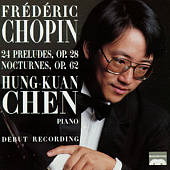

I saw this absolutely amazing post on the Musician's With Dystonia Bulletin Forum. It's a PDF file, but doesn't require downloading. Hung-Kuan Chen, a pianist, speaks about his personal challenges with dystonia over the years, and how he eventually overcame it. I know I posted this under Q&A/Interview's even though it's a document that he posted himself on the forum. I posted the link below.
He approaches it very intelligently, and describes in detail why he chose a certain way of approaching his symptoms, and how. With so much respect for this man for sharing his wisdom and journey, I wanted to share it with you, as I feel it can benefit many.
Link: Hung-Kuan Chen (Piano): on Overcoming Hand Dystonia
I especially relate to the issue of overcoming the opposing muscle groups. Even though embouchure dystonia is much less understand than hand dystonia, I still find it similar in more ways than we think. He speaks about how the muscles are fighting for dominance, as there are different signals being sent to the hand, and how these signals overlap and cause tension/the contractions. He also talks about finding the threshold.
I immediately thought of the threshold being similar to how I find what I call the "leverage" area (I spoke a lot about this in my blog titled "Natural Release". I find the leverage area by finding the middle ground between the signals. I feel like the primary/dominant signals that are overlapping in my playing are not that difficult to point out; I feel like one of the many yet very dominant signals is trying to relax my embouchure from tensing up too much - to collapse it, and another dominant signal is trying to form a natural stabilized/functional embouchure but fighting the collapsing by stretching out too far and tensing up, and I can't seem to get a grasp on either one. It's like working with stubborn tissue, and any movement or attempt to form an embouchure is like touching an electric fence...it immediately causes bursts of spasms. As soon as I found my leverage, the contractions gave way slowly over time.
I had to first reduce the overall contractions by finding ways to relax them through anything I found that helped; buzzing, stretching, certain patterns, playing in the pedal register, etc. It wasn't an automatic release of the tension, it was more similar to massaging a knotted muscle over a period of months before the first layer of the knot gave way to the second. I kept working on reducing the overall contractions to a point where I finally could regain a tiny bit of sense or grasp over certain notes (usually just the tops of notes at first/skimming the surface). Then those certain notes helped me find my leverage...an area where I had reduced contractions, but could still maneuver enough to work my way into other notes, then registers, then patterns, etc....by slowly returning to those key areas every day and just touching upon them lightly.
My best analogy is; pretend you are going to try to pull your arm towards you like you're lifting a small weight. You try to pull your arm towards you, but the opposing muscle contraction instead fights it and tries to pull it away from you. In order to overcome this, you can't force your arm to pull towards you, it will cause more fighting/tension/contractions. Instead, you have to gently test the contractions. You stretch your arm/muscles, try to relax it, soak it in warm water, whatever relaxes it before you start to work on these contractions. Then you slowly pull your arm towards you just a tiny bit, and once the contractions happen, you release your arm. You keep doing this, just slowly pulling your arm towards you at tiny increments over time....every time the contractions happen, you release your arm, and eventually over time the contractions lesson as your body realizes what you are asking it to do. Pretty soon you are able to pull your arm towards you with less tension..the opposing muscle movement isn't nearly as dominant, and then eventually the movement of "pulling" towards you becomes the dominant signal to your brain. But it also takes even longer to learn how to pull your arm towards you with added weight, so you also have to learn carefully how to add weight slowly without regaining/causing tension to build again and take over....the added weight can easily trigger the body to overlap signals again by sensing that what you are doing causes possible strain. So with all this said, this is why it takes so long, many months or years to overcome this. It's like re-wiring your body, or how Hung-Kuan says, trying to undo the cluster of knotted wires that you might see on a computer...they are all knotted and sending various signals...you have to undo each and every knot with gentle movement and patience.
I feel like I've had to slowly rebuild every aspect of my playing through awareness and patience, and calmly listening to what my embouchure/body was telling me. It takes a lot of focus to become aware and intune with your dysfunctional embouchure. I feel like I've had to go from completely deprogramming my embouchure to slowly rebuilding it by navigating every movement through patient awareness.
The best way I can describe it is: imagine if you had a repetitive injury in your leg from running; the injury was so severe you had to quit running. You had to take time off, and heal. But then when you returned to running, things weren't the same. Your muscles were stiff and not working properly. One might say that in order to avoid the injury, you need not run again, but you actually do, but not right away...you would have to first stretch the muscles, relax them, move in slow motions, and then slowly work on rebuilding muscle endurance, and not rush things. Eventually you would get to a point where you could start speed-walking, or light jogging, but with much more awareness of your body and knowing when to not rush things. You would do all of this in order to properly regain your abilities in your leg. You wouldn't just jump head first into running miles upon miles, and hit the gym for 3 hours doing weights and laps, or try to use your leg like it's 100% stable as before.
This is the same with my embouchure dystonia. I once thought like many brass musician's are taught... to approach it like a normal player...like I had normal function. A lot of brass players will tell me or point out to me, "Your chin seems to have some bunching....your corners seem to collapse...I think this can be resolved through good breath support/air, and holding a stable embouchure formation." Farkas definitely influenced the way we look(ed) at embouchure form and function, but the problem with his concept was that it was to generalized of a view. It's not our fault as students we were never prepared to understand embouchure form and function beyond a book and pictures...there isn't a lot of studies on it as there should be, but that's definitely changing today. I really like Dr. Wilketone's blog because he analysis embouchure form and function unlike anyone else, and dedicates his time to studying it in motion. He shows observations of many things we can't see in a picture, and the various differences between different embouchure types.
SO the problem with Farkas's concept is that (1) if one wants a stabilized embouchure or in better words ...a functional embouchure, practicing holding one compared to a picture of another's is not realistic in the sense that an embouchure does not develop that way. If you want to have healthy strong arms to row a boat, you don't just sit there and hold your arm in a flexed position.....muscles develop through motion, and naturally develop best with time, rather than force/strain, and MOST importantly, they learn to function in a specific way depending on what you are doing (our muscle memory helps us to remember to move in specific ways as we develop, and our sensory helps our brains recognize what it feels like to do it). Embouchures develop through motion. Here is the (2) second problem,...everyone's embouchure functions differently, and not all are the same. There are some similarities among players, but there are also many who function severely different due to their facial build/makeup. (3) Air does NOT help a dysfunctional embouchure, especially if dystonic, it can make it worse. Don't get me wrong, breathing is good (if it's used as a warm-up/to focus ones self, or in prep-work like buzzing if it doesn't cause too much tension), but it can only come in handy when a certain level of function has been restored.
For example; In the beginning when my symptoms were severe, practicing long-tones made things worse and were out the of the question. Long-tones take a certain amount of muscle control, endurance, and abilities restored. Over a year later now, I finally am at a safe enough level to work on long-tones, and this also includes air. The dysfunctional embouchure can't focus and air stream, so the more air you try to blow through, the more it tenses up because it can't handle it. BOTH can cause more tension or strain on the muscles in the beginning. Light relaxed air via nose breaths or light intakes, combined with air-attacks/poofing in short durations was much safer and effective over a long period of time.
You can not approach a dysfunctional embouchure with such generalizations as "use more air", "work on holding that chin flat," "we must stop the movement in your face." Healthy normal embouchures take a while to develop over time, but dysfunctional ones take even longer to restore, and can be trickier, due to the fact that the pathway to recovery is not so simply summed up. The dysfunctional embouchure needs extra awareness, care, patience, and most of all TIME. It's not something you can develop through "lessons" every week....lessons require set goals, practice routines, pieces of music, technique-focus, and work/effort. Dysfunctional embouchures need to take it easy, they shouldn't play all the time, or every week, or have set requirements...they have a pathway to recovery of their own, and the only person best at understanding that pathway is usually the player themselves, as they can "feel" what's going on that no outsider can understand easily. That is why some injured/disordered/debilitated musician's chose not to work with anyone, or to not work with someone who hasn't ever been through the same thing.
Anywhoo, I'm rambling about my own experiences again! I wanted to explain how I related. The opposing muscle groups, the individual challenges/personalized process, and some areas/generalizations/techniques that cause more harm than help.
I hope you enjoy his article! It is truly amazing!!!
Subscribe to:
Posts (Atom)