Wednesday, July 31, 2013

July 31st Working with Relapse Symptoms - Vlog Practice

 Yay! Finally got a video up. Haven't been able to find a place to record since moving to Denver. Luckily University of Denver music building was open yesterday evening...first time I heard myself play out loud/outside a mute in a longgggg time. 

Yesterday's session was pretty rough due to the relapse symptoms. But good that I captured it on camera...approx. 1 hour and 20 minutes of playing. [Also, I'm going to upload a video of what my playing is like after the relapse has passed; Link will be highlighted -->here ...as soon as it's posted.] 


You can see the areas where I struggle the most with the symptoms, but also how I work at ironing them out/reducing them. Tried to not talk a whole lot...but you know with me, I love talking/writing.

Anywhoo, here's the videos!! Lots of slow methodical practice. I was happy with the work done!!!


Part 1 - prep-work...and pedal range (working way upwards)


Part 2 ...more pedal range work and middle register, etc.


Part 3 - ...a bit of excerpts near the end. Thought I'd have a couple seconds of fun! :)


Part 4 ...arpeggios/open-harmonics, and octaves.

Saturday, June 15, 2013

Welcome Back!?!?! (Some Observations)


The view from my balcony!
My visit to DU with a friend.

Between my place and Boulder

Part of my work is in Glendale.

Hey everyone! It's been forever  since I've updated my blog. I started work in Denver on May 5th. It's been a little over a month since I last was on blogger. A lot has been happening, and I'm definitely busy still getting all my ducks in a row here. So far things are going great!!!!!! I'm all moved into a beautiful townhouse near red rocks, have been meeting/playing guitar with some local musicians, have lost 15 pounds (Yay!!!!), got a couple of students, and will be coaching a brass section in the fall. I'm excited!!! Especially for next year too at CU! :)

As far as my dystonia, things are still going good! I haven't been able to practice as much as I've wanted to, but this has been beneficial as it's paced out my practice/playing schedule; a break is always good now and then as long as I feel physically it doesn't makes things worse...and at this point in time, a break doesn't hurt me. It's like my friend Rhodri says - Recovery is up and down, but in general it's constantly on an upward scale. As I've slowly recovered, I'm obviously more of a believer now than ever before that I'm able to overcome embouchure dystonia. I can rest assured that improvement is on it's way every step I take and that there is no need to rush or worry like I had definitely done in the beginning/past. Yes, it's been painstakingly slow, but I look back and see how far I've come...and I know it is not all for nothing. I'm halfway there or more! :)

Today I was practicing, and I have some observations to note. I'm still working on my paper by the way! I had to post this on here though since I can't record. I don't have a practice space where I can play openly and record. I'm practicing with my silent mute at home, and because I have very close neighbors. I'm hoping I can find a place to practice openly and record again soon! It's been way too long without a video.

Anywhoo! Observations...

Right now a lot of stretching and freebuzzing has been my focal point. Huge emphasis on stretching though.

This is hard to describe. In the very beginning there was so much tension in my embouchure that I felt like it was STUCK in a very fixed tense position or movement....it was either stuck in an extreme pucker, or a extreme collapse/frown. I couldn't find a middle ground. The tension and contractions were so intense that I literally had no control or flexibility or sensation in my upper lip or around my embouchure. Slowly over time I started to iron out the tension and contractions by deprogramming my embouchure. I did this by playing on a collapsed embouchure at first for a very long time, with no tonguing, and focusing on just slurring chunks/sections of chromatics in my pedal register. The low register because the vibrations were less intense and allowed the muscle around my aperture to relax, and allowed me to build things from bottom up. I literally had to derive the movements/settings of my embouchure as far away as possible than the embouchure that I had known for so long and played on for so long. Basically a ton of miniscule painstaking frustrating adjustments in the way I played over a long period of time....I mean things as tiny as being aware of how contact there is between the lower lip and rim of the mouthpiece and if there needs to be less pressure or a tish more to allow the upper part of it to vibrate. It's like learning how to walk again. If you're an Olympic runner, your muscle memory and coordination is so entwined and ingrained over the years that you'd don't have to think about things....but once you have a huge injury/setback, it's literally like learning how to go from crawling to walking with a crutch, to literally being aware of every movement you make along the way towards recovery - like noticing what foot you should put more weight on, or if you have to bend your knee a little more to move forward, or how your hips play a huge role in movement, etc. You become so much more highly aware and in tune with your body - in what it can and can't do, and what it's ready to do.

Eventually I got to that point where I moved from a less collapsed embouchure to a more flexible embouchure...where my corners were naturally wanting to transition more on their own than me slowly nudging them while trying to not trigger a bomb of contractions. As my corners started to naturally relearn how to move on their own, the flexibility of my lower lip and jaw/chin started to kick in too and was a struggle too; since it controls so much more than what I was aware of. Anywhoo, soon I was able to control my lower jaw and lower lip support better.

Now I'm at a point where my embouchure is drawing me more towards focusing on the flexibility around my aperture, rather than corners or lower lip or jaw etc. I don't know how to describe this....

....it's like I'm focusing on the gracefulness/flexibility that develops between movements. Like in my stretches - the movement between point A and point B is the most important thing to be aware of. A good example is like watching a ballerina. They are very muscular and there are specific moves that require a great deal of control, tension, but also they are required to go from a very intense move to a very graceful delicate move...they have to be able to portray body language that requires both tense muscle movement and also graceful movement.

It's that release of the contraction that I'm talking about. If you squeeze your fist as tight as you can and then relax it, the tension goes down pretty fast as soon as you release your fist/grip. But with dystonia it's like that tension is stuck there...you try to release it and relax but it won't go down...it usually requires a ton of exercise and stretches etc to move it back into a more relaxed feeling/position.

This ability to move from tense to relaxed feeling in the embouchure is very difficult...no...extremely difficult with dystonia. It's the one thing I feel is the biggest obstacle to overcome with dystonia. I think that's why dystonia is so noticeable in the middle/low register; because the embouchure muscles are required to have the most about of control and flexibility in this register.
In my pedal register my lower and upper lip are more relaxed and vibrate like a flag and my corners allow me to adjust to changes. In the upper/treble clef range I feel like here it's easier to play even though it seems tighter playing, my embouchure is more able to adjust to the smaller aperture opening easier....and I know this is just an assumption...but I think it's because of the way we are built/designed to eat food and drink....when I go to drink out of a straw, or chew something, the muscles around my mouth/embouchure are similar to the setting I use to play in my upper register. I have a small upper bite, so when my teeth align when I blow into my horn, the upper lip is curved over the surface of my upper teeth...(I know I'm over-exaggerating) it reminds me of a beak on a bird. Or like how I see flute players embouchure when they blow out.

In the middle register/lower register it's difficult to play because it requires the duality of being able to adjust the tiniest feelings/things here and there. It's like I have to be able to relax and tense up in certain areas more often, and depending on what movement/pattern I'm playing. It's like the middle register/lower register requires so much more of the small details and adjustments of the embouchure to come into play. Sometimes I'll be holding out a low F# or low A and I notice the corners of my embouchure need to feel relaxed yet stable/tense, and my aperture needs to be able to relax but also squeeze in sometimes.

I don't know how to describe this...

...the middle register/low register is like a bringing together of opposing muscle groups, the synchronization of relaxation and tension..the synchronization of opposing muscle groups...and this is exactly where dystonia has the most difficult, because dystonia is a war between two opposing muscles. So to try to get them to work together in a register where they're both required to work together fluidly...not going to happen so easily! So frustrating!!!

Anywhoo, I'm now at a point where the fluidity and sensation in my upper lip is more focused on. The area around the aperture can relax and contract too...so this is an area where I'm now observing how it contributes to the fluid movement between point A and B. So lets say I'm playing a slurred passage from upper register down into my pedal register; before my upper lip would just sit there and let the rest of my embouchure do the work...and I'd end up with a double buzz....but now I notice the muscles around my aperture are doing there part to contract as I go into the upper register and relax/let go of that tension immediately as I descend into the lower register.

To normal players, the ability to contract and release a muscle while playing is not even thought about...but with dystonia, this is the focal point of my troubles...it's all about learning how to reprogram my embouchure, which requires relearning how to contract and release/tense up and relax my embouchure throughout playing, and to regain the ability to do it naturally over time...just like a person learning how to walk again...eventually it will be natural, but for a long time it requires a high awareness and observation of miniscule movements and redefining the way you move/play or adjust. It is frustrating to have to think about it...but there are moments where I don't have to...and it's those moments where I know I must be doing something right or on the right pathway to recovery! :)

Friday, May 3, 2013

Moving Forward!


Hey everyone! Well, it's May finally, and for once there isn't snow on the ground in North Dakota....but seems to be everywhere else. I am excited to announce I'll be moving! I'm actually moving this weekend to Denver Colorado and starting my new job. I'm really looking forward to returning to this beautiful gorgeous state, and so thankful for all the people who have offered to help me out in this abrupt change. The sad news is I may not be able to attend to my blog for quite a long time. I have a lot to do and accomplish as I transition to my new place of living. Thank you to everyone who has read my blog and kept up with my dystonia updates. Things are still going great, so maybe at some point I'll be able to post a video again. For now, goodbye, and see you in the future at some point!!!!! Love and hugs!

Sunday, April 14, 2013

I GOT ACCEPTED!

I just received the news that I got accepted to the University of Colorado Boulder School of Music!!!!!!! It will be a lot of hard work, but I am definitely ready and looking forward to this new beginning!!!!!! :-) So much to be grateful for and the long journey it's taken to get to this point!


Monday, April 8, 2013

Mouthpiece Experiment

Okay. So the G17 cup isn't helping me cope with my dystonia. I tried it because I thought it would help with my lower lip that sticks out of my mouthpiece. I also was curious how my embouchure would handle the less resistance again. But nope...neither helped. So tried a bunch of other wide rims...nope. Maybe it's not an issue with sealing my pudgy lower lip left side in? Soooo I know it was a bit risky, but I tried to play more on my right side setting to see if that would help; usually this never helped in the past, it just caused difficulties with muscle movement. But, this time I think because my jaw has regained control and my left corner has more control and flexibility that IT WORKED!!!!!!

I know it sounds weird, but it was like my heightened awareness over observing my dysfunctional embouchure over a long period of time allowed me to notice subtle differences or shifts in my playing. I felt and saw my muscles on both left and right finding a happy balance in the setting I experimented with. I had 2 important observations:(1) My right side provides stability and control, while my left is more relied on for flexibility and pivoting. I think so often we think of the aspects of our embouchure grouped as Lower lip/upper lip coordination, corner and chin control coordination; where our upper lip provides flexibility and lower lip stability, and our corners provide stability while the chin helps with flexibility and movement between registers too.

But I also noticed that our pressure points vary in registers, and are most noticeable in areas where I pivot. So I realized I rely on the right side of my embouchure right now for stability and control, while my left side and lower lip work together to provide flexibility in the areas where I pivot...so in my middle register where I transition between lower and upper range. It's a weird analogy, but it seemed like my right side is like a flag pole firmly holding my setting in place, while the left side was like the flag being able to move back and forth between the ranges with fluidity.

I know the embouchure is a complex thing to understand, so these are just observations in my own playing. What muscle groups or aspects of my embouchure do what...how they function in my playing. It's interesting to see how it's developed over time. So I'm not sure if this is what it will be like in the long-run (this stability on the right side), or if it's just temporarily this way until my left corner and lower lip control improve....but I think maybe it will be this way in the long run because it felt so natural. It didn't feel awkward like I had to try hard at all to play. It's pretty easy to tell the difference between the feeling of dysfunctional movement vs. natural functional movement....it's not frustrating as hell. lol!!

WOOT!!!!!!!!!!!!! I played all of my scales 2 octaves both fast and slow with no spasms or contractions!!!!!!!!!!!!! I even went back and tried to play them loud, then soft, and back and forth to see if it would cause loss of control (because usually it's this change in dynamic that triggers symptoms). There were a couple of trouble areas, but mainly just with the pivot due to lack of endurance from playing scales over and over again. I had so much fun!!!!!! So sticking to my Gold Farkas DC. 

Sunday, April 7, 2013

Hope

One of my favorite songs. Whenever I'm feeling down about my dystonia or about my future, I just listen to this song and I'm already feeling better. It has carried me through quite a bit this last year. <3

Thursday, April 4, 2013

(Video) Happy Easter! Some Overtones

Meant to post this sooner! I mentioned some important things in my video since I've noticed someone online who wrote about how he thought my rehabilitation just took practice. So he definitely doesn't understand that embouchure dystonia is a lot more complex than it seems. The exercises used as part of the physical rehabilitation may be simplistic (ex. buzzing, freebuzzing, stretches, chromatic slurs), but as I've mentioned before in many blog posts that the exercises have a different purpose than what they originally are meant for; it's the mental awareness, the way I physically approach my instrument, and changes in external factors which all make a difference and contribute to this very personal process of rehabilitation. It involves much more than this too. I think that is why dystonia is so hard to explain...it's a neurological movement disorder, so it takes a lot to regain abilities, so any playing basics are equivalent to trying to run a marathon on crutches with a broken leg.

This video I show some enharmonic exercises which I use as a mean to support the development of my lower jaw control. I definitely couldn't have done this 7 months ago, or a year ago. As there are endless tiny abilities and movements I had to overcome and regain in my playing. It isn't until recently I've been able to work on overtones, long tones, and move into my mid-to-upper range either. So definitely not something I'd work on in the beginning or middle'ish stages, as it would usually cause too much tension built up right away.

An interesting note is that I can slur fine and have good control over my arpeggios while using standard fingerings. For example if I played C-E-G-C with the fingerings: open-2-1-open, I can play it with ease, but as soon as I play it as an open harmonic...meaning C-E-G-C as open-open-open-open, it's very difficult to control. I think naturally because the partials are closer and less defined of a feeling to grasp onto. It's like trying to hit targets with an arrow while swinging on a rope, rather than using stepping-stones to align with your target as they get higher and higher. I also have to monitor my breath control more now, whereas before it also use to be something that didn't help my playing (i.e. full breaths/steady stream of air), but now does and is necessary. 

You can see in the beginning how much my embouchure control was limited, but near the very end of the video you can see how much it loosened up and I was able to do the same exercises with a little more control. It's this small amount of control and ability to relax my tension/dystonia symptoms that make a world difference in my playing! Baby steps = huge progress...even if it takes many many months to go from what seems like step 1 to step 1.5. Should be posting another video today or tomorrow!


Saturday, March 16, 2013

Embouchure Dystonia: Blogging


Hey everyone!  I'll keep updating the blog as I go along with things here and there when I can. I'm very excited about contemplating over everything I've learned, it will be a good reflection on how far I've come. This will benefit me a lot and hopefully allow me to explain the many factors involved with dystonia and coping with it more clearly to others. Now to get back to work...see you soon!

- Katie Berglof

Monday, March 11, 2013

Musician's Dystonia: A Guide To Understanding And Coping With The Disorder. Edited by Juame Rosset I Llobet, and Silvia Fabregas I Molas.

Thought I'd throw in a little motivational quote here while I could! Keep your chin up! (even if it wobbles!) 


I found another great PDF file over Musician's Dystonia.

Check out the table of contents on page 3 and 4. It covers quite a bit, and surprisingly goes over diagnosis process and what to bring to your neurologist/what you can expect, etc. Which I find really important information to pass on to others! I think this is a great manual for anyone to read!!!! Also check out page 119, I find the table showing the percentage of effective treatments outlined in a study. It's really interesting! It took a bit to read through it, and I'm still not done reading it. I basically looked up the areas I was interested in by the table of contents, but hope I get to read more of it when I have time! What a great find!!!! Hope this helps others! Here is the link: http://www.embouchure.nl/bestanden/Musician's_Dystonia-complete.pdf


MUSICIAN'S DYSTONIA
A practical manual to understand and take care of the disorder that
affect the ability to play music.

Editors:
Jaume Rosset i Llobet and Sílvia Fàbregas i Molas
Institut de Fisiologia i Medicina de l’Art-Terrasa. Barcelona, Spain.
www.institutart.com
info@institutart.com

Collaborators:
Josep Fargas Fernández.
Professor of Labour and Social Security Law, Universitat Pompeu Fabra. Barcelona, Spain.

Álvaro Pascual-Leone.
Center for Non-invasive Brain Stimulation, Beth Israel Deaconess Medical Center, Harvard Medical School. Boston, Massachusetts, USA. Hospital de Rehabilitació Institut Guttmann. Barcelona, Spain.

Josep Valls i Solé.
Neurology Department, Hospital Clínic, Universitat de Barcelona. Barcelona,
Spain


I'll also post it on my sidebar too! :)

Embouchure Stretches / Lip Stretches And Massaging Lip Tissue

I guess I could have recorded this on camera as it would have been easier. But I'm so use to doing this when I wake up and still lying down, so took photos instead. Just a warning, there are some not-so-pleasant close shots of my embouchure ahead. Let me tell you, these are super flattering pictures of me! (sarcasm). It's just photos of the stretches I do, but not the most pleasant to look at, and quite comical to me. What can I say? Sometimes working with embouchure dystonia takes weird distorted movements in the face in order to get all the spasms out.

Why stretch? Just like with larger muscles, stretching increases flexibility, it is elongating a muscle - squeezing the muscle and then completely relaxing it. It is the relaxing which is the most important (sometimes our muscles don't want to, for example like in our calf...instead of relaxing it might turn into a muscle cramp instead). It helps prevent overuse injury, and allows you to get blood circulation going. However, too much stretching can be dangerous if you start to feel pain or numbness or no blood circulation; you don't want to overdo it...so if it hurts, take it easy. It's like trying to do the splits....that type of flexibility doesn't come easily and takes time to build...not always going to happen the first day! Stretching in a sense is also a workout in itself, so this why it is important to not overdo it. I think it is the most important thing for me to do though before playing horn. Low-warmups are not always enough to get all the tension out of my face.

The most important part of stretching is what the muscles do between point A and point B. The first exercise I do works on this concept. Let's say you want to flex the muscles in your arm (as if you were showing off); your arm is at rest, and then when you flex it it jumps right into position...you don't have to think about it, or the motion of the muscle movement getting there from point A (at rest) to point B (flexed).

With Embouchure Dystonia it IS very important to be aware of the motion between the movements; from point A and B; it is usually the between motions where you will see spasms and quivers occur, so this is the area you wan to be aware and take notice what happens. So here we have the first exercise I do to test to see how my symptoms are for the day. Usually I do this when I wake up. Some dystonic people find that your symptoms are not as strong right when you wake up, and this is usually because sleeping helps as it increases dophamine levels. For some dystonic people it doesn't effect them...for me not so much...but I like to stretch in the morning anyways just to get circulation going.

The most important thing about stretching is (1) The motion between point A and B, and (2) Holding the stretch once you arrive to point B. Just like when you stretch you're legs, you hold the stretch in position for a couple of seconds or a minute and then release. 

STRETCH NO. 0 AIR OR WATER STRETCHES (whoops, forgot to add this one first...so labeled it 0).
I do this one on camera all the time. I either roll air or water around the inside of my mouth, making sure to get under my upper lip, chin area, cheeks, etc. This helps stretch from the inside-out, and it can also help with other injuries, for example if you have a muscle tear. This is actually one Dr. McGrail's exercises for musician's with lip muscle tears! 

So this first exercise below I call the "GOLDFISH LIP STRETCH." I start at point A which is at rest (meaning relaxed and still/no executing movement yet), and then slowly (I mean unbelievably slow) starting to move my muscles into formation...moving towards my destination of point B (the goldfish lips):

STRETCH NO. 1 GOLDFISH LIPS
I start to slowly form an opening...
I slowly start to stretch my lower and upper lip outwards, and it is usually this first motion which has the most spasms or shakes since it requires me to keep my muscles relaxed yet while flexing them.
As I keep slowly stretching my lips into formation, I want to make sure I don't jump directly into the final formation. Usually with dystonia your muscles can handle point A and point B, but it's the getting there/between state which is difficult to maintain and execute. So I try to not flex too fast in an outward motion with my lips!
And the final formation...the comical goldfish lips! After they are formed, I hold them like this for a couple seconds and then release/relax my face back into a resting position/stillness. I do this many times until I can go from point A to B with less spasms. I'm at a point where the spasms go away fast and melt away as I stretch. May look crazy, but what's weird is I can feel my muscles wanting to stretch in a certain direction...it's much like when you wake up and stretch your arms above your head...or how you see a cat stretch...you just FEEL like you have to do it! Another interesting observation is I can feel the sore-spots; the areas or muscle groups in my embouchure that have been working the most in my embouchure at the time (ex. my chin muscles are doing a lot of work lately more so than my corners, so they feel sore as I stretch).
STRETCH NO. 2 EXTREME FROWNING STRETCH
Pretty much explains itself. However, I feel like when I frown my corners go so extreme that they feel like they are along the sides of my chin and I can definitely feel the stretch! Good stretch! ahhh...:)
STRETCH NO. 3 THE SOUR LEMON STRETCH
This one makes me laugh! When I do this one it's important that there are two areas of "scrunching"; I want to feel as if the upper most region of my upper lip (near my nose) is scrunching up into my nose.  and secondly I want my nose to scrunch as if the apples of my cheeks are being pulled inwards towards the sides of my nose. This not only stretches my upper lip muscles (in a non-linear way), but it stretches the muscles that run from my nose down to the corners of my lips and also the muscles that buccinator muscles in an upward stretch/vertical. 
STRETCH NO. 4 THE CORNER STRETCH OR SMILE STRETCH

This is just a mini-embouchure crunch. I form an embouchure, with my lips closed, and focusing on my corners, I want to stretch them as far out as they can go in a horizontal direction <----->. Then I bring the corners back in. I do this flexing my corners back and forth/in and outward. Similarly...

STRETCH NO. 5 THE PUCKER STRETCH
Similarly...I do the pucker stretch which is also part of an embouchure crunch. I form an embouchure , with my lips closed, then while focusing on my corners being firm, I move my corners inwards, resulting in a pucker. Then I move them back out...I move them out and in/back and forth, then go back to relaxing.

STRETCH NO. 6 THE CIRCULAR STRETCH
I didn't get a photo of this one, since this one takes quite a bit of movement. It's basically a combination between the Goldfish lips stretch and the smile stretch (but with mouth open)...moving in a circular pattern. I always do this one on camera too. I'm just moving the muscles in my face all over the place in order to stretch the whole group of muscles in my face all at once. 


I know I may seem crazy posting all these weird looking photos, but honestly! I'd do anything to regain my playing abilities on horn, even if it means I have to make weird faces in order to stretch and reduce the spasms/symptoms before I play. These stretches really help me a lot, especially right now since I'm working a lot in my mid-to-upper range that builds up a lot of tension.

Also a little bit about massaging. Massaging the inside of my upper/lower lips moving horizontally outwards rather than in a vertical motion, and also massaging the inside of my jaw line helps with sore muscles. I don't massage both the outside and inside with my thumb and index in a circular pattern like most people suggest, I just use my index to caress the tissue on the inside.

What I find most beneficial to me is using the thumb to push against the inside of the cheeck (starting at the center of the cheek, and stretching the tissue outwards and holding it for a cuple seconds. As soon as this releases, I move on down to the bottom of my jaw line (still near the center of my lower jaw, and eventually make my way to the back of my jaw.


Most of the tension I find in the back of the jaw, and believe me it is painful to release!!! So that is why I start near the center of my cheek and work my way back to the bottom of the jaw. Alright! Enough awkward rambling about my lips. :-/ I'm out! Will be back again soon!!!


Wednesday, March 6, 2013

Cloud 9


Best practice ever!!!! I was actually very scared these last 2 weeks or so, as I was going through an intense relapse (the longest relapse I've experienced so far) and had to be careful; the relapse was different/weird this time around because my upper lip would have a random singular spasm while I was at rest (meaning not while I was playing, but while I was just watching TV or driving...which never happens), and the singular spasm was really forceful...almost painful. I felt like my embouchure was really freezing up like a muscle cramp and it was stuck like this. I couldn't relax it even with ice pack/heat packing or with stretching, etc. Then it swelled up randomly in week 2 even though I hadn't practiced (could have been something I ate). I thought "What the heck? Maybe I overdid it." I feel it's because I've been working my way into my treble clef/upper range and it takes a lot out of me...sometimes hard to tell how much is too much. So I rested for a couple weeks just letting my muscles settle, and could tell whether or not it was safe to play just by trying to form an embouchure. Even last week my boyfriend asked me, "Why are your lips quivering when I try to kiss you?" ...that was embarrassing to explain!!!! uhhhg.

But a couple days ago I felt like my face settled, was at rest and relaxed, so I went ahead today and practiced. I did a lot of stretches, and immediately saw the spasms melt away in the mirror as I stretched and re-checked them. My embouchure gave into relaxing and I started to play.

I did my overtone series exercise and I couldn't believe the improvement! It was unbelievable!!!! Remarkable!!!!!! I felt more definition of the space between the partials, and it wasn't frustrating/difficult to control the movement/fluidity as I went down into the lower partials on the F horn side. It felt natural and wonderful!!! I've never felt that natural ease of control ever before when working on overtones...usually something that's extremely difficult for me to control, and takes a lot of endurance. Hoping this improvement will stick and I can capture it on camera. It's just like another dystonic musician said, "You can't have a relapse unless there is significant improvement!"

I'm on cloud 9!!!! :D :D :D :D :D :D

A happy picture!

Friday, March 1, 2013

I love teaching!

I can't emphasize how much I love teaching! I work with some really talented kids, and have the greatest supervisor. I am extremely grateful for each and every day I wake up and get to teach. I have never been so happy in my life as when I am when I'm teaching. It is my purpose in life, and a calling I never knew I had.


I also love spending time with my nieces and nephews...a picture of my youngest niece, and my youngest nephew (baby B!)....


Sunday, February 17, 2013

(Video) Working on Chin Muscle Group and Expanding Larger Interval Motion

I didn't have a mirror behind the camera. Good though that it's primarily focused on just my chin, as that's what I was working on. A bit embarrassed though, as it's not really a physical attribute I want to show off. Self-conscious. :-S

Part 1

Part 2

Part 3

Part 4

I recorded these videos while away from home. 

Monday, February 11, 2013

Past Ensemble Experience and Repertoire List


I collected my degree audit from the last year of college and looked up all the ensembles I was playing in, as well tried to remember all the things I performed and did musically outside of college too. I wanted to write out a repertoire list of which pieces I played each semester...but that's literally impossible...in another famous person's words: "AIN'T NOBODY GOT TIME FOR THAT!" :D haha. I definitely can't remember any of the pieces I played in Wind Symphony. However, the little that I can remember and what I could dig up, gives me a good view of what I was doing as far as performance load at the time. I wrote a rep list at the far bottom. I remember pieces I played, but not when...it's hard to remember.

This is pretty rough outline...there's probably a lot missing!

Fall 2002
Principal Horn Sioux City Youth Symphony, Wind Ensemble, Brass Quintet, Lessons. Major Landers Scholarship. Mustang Merit Scholarship.
Spring 2003
Principal Horn Sioux City Youth Symphony, Wind Ensemble, Brass Quintet, Lessons

Fall 2003
Principal Horn Sioux City Youth Symphony, Wind Ensemble, Brass Quintet, Wind Quintet, Lessons. Joined IHS.
Spring 2004
Principal Horn Sioux City Youth Symphony, Wind Ensemble, Brass Quintet, Wind Quintet, Lessons. Win Concerto Competition in November/perform Strauss 1 in April.

Summer 2004
Michael Thompson Horn Coarse

Fall 2005
Win Associate Principal/3rd Horn Bismarck Symphony Orchestra, Lessons with Thomas Porter (Past student of Ethel Merker's/Masters Northwester). Accepted into the University of Northern Colorado School of Music.

Spring 2005 University of Northern Colorado
Principal Horn Brass Choir, Principal Horn Symphonic Band, Substitute Principal Symphony Orchestra and Wind Symphony, Horn Choir, Lessons

Fall 2005 UNC
Principal Horn Symphonic Band (tour), Assistant Principal Horn Orchestra, Horn Choir, Lessons, Century Brass Quintet/tour. Accepted into University of Northern Iowa.

Spring 2006 University of Northern Iowa
Wind Symphony, Chamber Winds, Horn Choir, Horn Lessons. Nominated for Rocky Ridge Festival Teaching Assistantship Scholarship. Guest Artist John Ericson. Midwest Horn Workshop.

Fall 2006 UNI
Wind Symphony, Horn Choir, Horn Quartet?, Horn Lessons
Spring 2007
Northern Iowa Symphony Orchestra (Saint Seans Organ, etc.), Wind Symphony, Horn Choir, HeldenCor Horn Quartet? Horn Lessons. Wartburg Symphony Orchestra. Princpal Horn on Brahms horn duo w/University Women's Choir? UMKC Mid-South Horn Workshop in March.

Fall 2007 UNI
Principal Horn Northern Iowa Symphony Orchestra (Shosty 1, etc.), Principal Horn Wind Symphony, Horn Choir, Horn Lessons. Principal Horn Wartburg Symphony Orchestra. Kaz Machala visits. Harris Instrumental Scholarship.
Spring 2008 UNI
Principal Horn Northern Iowa Symphony Orchestra (Amy Beach, etc.), Principal Horn Opera Orchestra (Crucible? etc), Wind Symphony (Tour), Horn Choir, Horn Lessons. Principal Horn Wartburg Symphony Orchestra. Mike Atkinson visits. Four Hornsmen visit. I write Guide to Horn Transposition that I wanted to publish in IHS, but never submitted...instead published through Knol.

Summer 2008 Cedar Falls, IA.
Waterloo Theatre: Into the Woods, etc.

Fall 2008 UNI
Principal Horn Northern Iowa Symphony Orchestra (Tchaik 5, etc.), Horn Choir, Horn Lessons, (Concerto Competition Prelim and Finals). Principal Horn Wartburg Symphony Orchestra. Guest Artist Elizabeth Freimuth coaches Symphony Horns.
Spring 2009 UNI
Principal Horn Northern Iowa Symphony Orchestra (Tour/ Stravinsky  and Tchaikovsky), Principal Horn Opera Orchestra - various opera scenes, Horn Choir, Horn Lessons, (Recital, Civic Orchestra Audition). Principal Horn Wartburg Symphony Orchestra. Principal Horn Metropolitan Festival Orchestra. Guest Artist Bill Caballero? April premiere Michael Conrads Curiousness and Agression for Horn and Piano w/Dr. Su. Horn Choir joint concert at University of Iowa w/ Jeff Agrell.

Fall 2009 UNI
Principal Horn Northern Iowa Symphony Orchestra (Dvorak 8, etc.), Principal Horn Wind Symphony, Chamber Winds, Woodwind Quintet, Horn Choir, Horn Lessons. Brass Choir. Substitute Fort Dodge Symphony Orchestra. Graduate school visit to Thomas Jostlein at UIL. Jeff Agrell visits. Record for Midwest Hacker's album.
Spring 2010 UNI
Principal Horn Northern Iowa Symphony Orchestra (Daphnis, etc.),  Opera Orchestra (Prima Donna),Wind Quintet/appearances and concerts, Horn Choir, Horn Lessons. Brass Choir. Principal Horn Metropolitan Festival Orchestra. Guest Appearance with Choir - Missa Kenya in March. WIU Horn Festival in April with Dale Clevenger. Win March Balu Mute Contest. April premiere Seth Butlers Sonata for horn.

Fall 2010 UNI Final Semester
Principal Horn Northern Iowa Symphony Orchestra, Horn Choir, Horn Lessons. Guest Appearance with Choir - you are the music. Guest artist David Thompson.


-------------------------------------------------------------------------------------------------

I had an easy time remembering all the orchestra pieces because I LOVED playing in orchestra and for opera. Best moments of my life spent in the orchestra, and also when I got to play solo repertoire for recital, etc. :-)


Horn and Piano Repertoire
Alan Abbott: Alla Caccia
Alexander Arutunian: Concerto for Horn and Orchestra
Ludwig van Beethoven: Sonata for Horn and Piano in F major, Op. 17
Eugène Bozza: En Forêt
Seth Butler: Sonata for Horn and Piano
Vitaly Buyanovsky: Four Improvisations from Traveling Impressions for solo horn: España
Michael Conrad: Curiosity and Aggression for Horn and Piano
Paul Dukas: Villanelle
Cecil Effinger: Rondino
Randall E. Faust: Call and Response
Reinhold Glière: Concerto for Horn and Orchestra in Bb major, Op. 91
Alexander Goedike: Concerto for Horn and Orchestra in F minor, Op. 40
Bernhard Heiden: Sonata for Horn and Piano in F major, Op. 17
Paul Hindemith: Sonata for Horn in F and Piano
Wolfgang Amadeus Mozart: Concerto for Horn and Orchestra No. 1 in D major, K. 412
Wolfgang Amadeus Mozart: Concerto for Horn and Orchestra No. 2 in Eb major, K. 417
Wolfgang Amadeus Mozart: Concerto for Horn and Orchestra No. 3 in Eb major, K. 447
Wolfgang Amadeus Mozart: Concerto for Horn and Orchestra No. 4 in Eb major, K. 495
Wolfgang Amadeus Mozart: Concert Rondo for Horn and Orchestra in Eb major, K. 371
Camille Saint-Saëns: Morceau De Concert, Op. 94
Franz Strauss: Concerto for Horn and Orchestra in C minor, Op. 8
Richard Strauss: Andante in F, Op. Posthumous
Richard Strauss: Concerto for Horn and Orchestra No. 1 in Eb major, Op. 11
Gilbert Vinter: Hunter's Moon
Orchestral RepertoireAlexander Arutunian: Trumpet Concerto in A-flat major
Samuel Barber: Symphony No. 1, Op. 9
Amy Beach: Symphony in E minor, Op. 32
Ludwig van Beethoven: Egmont Overture, Op. 84
Ludwig van Beethoven: Piano Concerto No. 1 in C major, Op. 15, mvt. III
Ludwig van Beethoven: Symphony No. 1 in C major, Op. 21
Ludwig van Beethoven: Symphony No. 7 in A major, Op. 92
Leonard Bernstein: Overture to Candide
Leonard Bernstein: Slava! A Political Overture
Georges Bizet: Overture, Patrie Op.19
Alexander Borodin: In the Steppes of Central Asia
Johannes Brahms: Academic Festival Overture, Op. 80
Johannes Brahms: Hungarian Dance No. 5 in G minor
Johannes Brahms: Symphony No. 1 in C minor, Op. 68
Johannes Brahms: Symphony No. 2 in D major, Op. 73
Aaron Copland: An Outdoor Overture
Aaron Copland: Rodeo: Buckaroo Holiday
Antonin Dvořák: Symphony No. 2 in B-flat major, Op. 4
Antonín Dvořák: Symphony No. 8 in G major, Op. 88
Antonín Dvořák: Symphony No. 9 in E minor, Op. 95
Edvard Grieg: Peer Gynt Suite No. 1 Op. 46
Edvard Grieg: Piano Concerto in A minor, Op. 16
Gustav Holst: The Planets
Jacques Ibert: Concerto pour flûte, mvt. III
Nikolai Rimsky-Korsakov: Capriccio Espagnol, Op. 34
Nikolai Rimsky-Korsakov: Russian Easter Festival Overture, Op. 36
Joaquín Rodrigo: Concierto de Aranjuez
Franz Liszt: Les préludes
Olivier Messiaen: Les Offrandes Oubliées
Wolfgang Amadeus Mozart: Sinfonia Concertante in E-flat major, K. 364
Wolfgang Amadeus Mozart: Symphony No. 25 in G minor, K. 183
Wolfgang Amadeus Mozart: Symphony No. 32 in G Major, K. 318
Modest Mussorgsky: Night on Bald Mountain
Modest Mussorgsky: Pictures at an Exhibition
Ron Nelson: Jubilee
Sergei Prokofiev: Lieutenant Kijé Suite, Op. 60
Frank Proto: Carmen Fantasy for Double Bass and Orchestra
Maurice Ravel: Daphnis et Chloe, Suite No. 2
Joshua Reznicow: American Sketches: A Fantasy for String Orchestra (arr. for full orchestra)
Gioachino Rossini: Barbiere di Siviglia
Gioachino Rossini: Semiramide Overture
Camille Saint-Saëns: Cello Concerto No. 1 in A minor, Op. 33
Camille Saint-Saëns: Symphony No. 3 in C minor, Op. 78
Pablo de Sarasate: Zigeunerweisen, Op.20
Jean Sibelius: Finlandia
Jean Sibelius: Symphony No. 2 in D major, Op. 43
Dmitri Shostakovich: Symphony No. 1 in F minor, Op. 10
Dmitir Shostakovich: Symphony No. 5 in D minor, Op. 47, mvt. IV
Johann Strauss II: Overture to Die Fledermaus
Bedrich Smetana: Má vlast
Igor Stravinsky: Firebird Suite
Pyotr Ilyich Tchaikovsky: Swan Lake: Ballet Suite, Op. 20
Pyotr Ilyich Tchaikovsky: Symphony No. 4 in F minor, Op. 36
Pyotr Ilyich Tchaikovsky: Symphony No. 5 in E minor, Op. 65
Pyotr Ilyich Tchaikovsky: Piano Concerto No. 1 in B-flat minor, Op. 23, mvt. 1
Joan Tower: Fanfare for the Uncommon Woman
Richard Wagner: Wagner: Der fliegende Hollander Overture
Richard Wagner: Siegfried Idyll
Ralph Vaughan Williams: Suite for Viola and Orchestra
Operatic/Choir and Orchestra Repertoire
Randol Bass: Gloria
Arthur Benjamin: Prima Donna
Leonard Bernstein: Candide
"Make our Garden Grow"
Georges Bizet: Carmen
Habanera
Quintette, "Nous avons en tete"
Toreador Song "Couplets"
Carl Orff: Carmina Burana : 5, 6, 7 14, 20, 24, and instrumental track
Wolfgang Amadeus Mozart: Voi avete un cor fedele, for soprano and orchestra, K. 217
Wolfgang Amadeus Mozart: Die Zauberflöte, K. 620
Introduction
Cosi fan tutte, "Soave sia il vento-Terzettino"
Don Giovanni, "Sextet, Sola, Sola in buco loco"
Wolfgang Amadeus Mozart: Le Nozze di Figaro
"Porgi amor"
Giacomo Puccini: Madame Butterfly
"Un bel di, vedremo"
Joaquin Rodrigo: Cuatro Madrigales Amatorios
Robert Ward: The Crucible
Ralph Vaughan Williams: Riders of the Sea
Giuseppe Verdi: La Traviata
Prelude
Introduzione, "Dall 'invito"
Brindisi
Valzer-Duetto, "Un di felice"
Stretta, "Si ridestra"
Wagner
Die Walkure, Act III, sc. 1, "Ride of the Valkyries"
Das Rheingold, "Entry of the Gods into Valhalla"
Gotterdammerung, Rhine-daughters Trio
Randol Bass: Magnificat
Wind Symphony/Wind Ensemble Repertoire: A crap ton of music
....and I can't remember any of it at all. haha
Chamber Music Repertoire: Yep, not even going to begin typing it out. Yikes! :-/

Monday, January 28, 2013

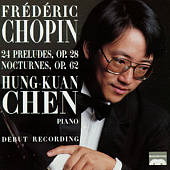
Hung-Kuan Chen (Piano): On Overcoming Hand Dystonia


I saw this absolutely amazing post on the Musician's With Dystonia Bulletin Forum. It's a PDF file, but doesn't require downloading. Hung-Kuan Chen, a pianist, speaks about his personal challenges with dystonia over the years, and how he eventually overcame it. I know I posted this under Q&A/Interview's even though it's a document that he posted himself on the forum. I posted the link below.


He approaches it very intelligently, and describes in detail why he chose a certain way of approaching his symptoms, and how. With so much respect for this man for sharing his wisdom and journey, I wanted to share it with you, as I feel it can benefit many.


Link: Hung-Kuan Chen (Piano): on Overcoming Hand Dystonia

I especially relate to the issue of overcoming the opposing muscle groups. Even though embouchure dystonia is much less understand than hand dystonia, I still find it similar in more ways than we think. He speaks about how the muscles are fighting for dominance, as there are different signals being sent to the hand, and how these signals overlap and cause tension/the contractions. He also talks about finding the threshold.

I immediately thought of the threshold being similar to how I find what I call the "leverage" area (I spoke a lot about this in my blog titled "Natural Release". I find the leverage area by finding the middle ground between the signals. I feel like the primary/dominant signals that are overlapping in my playing are not that difficult to point out; I feel like one of the many yet very dominant signals is trying to relax my embouchure from tensing up too much - to collapse it, and another dominant signal is trying to form a natural stabilized/functional embouchure but fighting the collapsing by stretching out too far and tensing up, and I can't seem to get a grasp on either one. It's like working with stubborn tissue, and any movement or attempt to form an embouchure is like touching an electric fence...it immediately causes bursts of spasms. As soon as I found my leverage, the contractions gave way slowly over time.

I had to first reduce the overall contractions by finding ways to relax them through anything I found that helped; buzzing, stretching, certain patterns, playing in the pedal register, etc. It wasn't an automatic release of the tension, it was more similar to massaging a knotted muscle over a period of months before the first layer of the knot gave way to the second. I kept working on reducing the overall contractions to a point where I finally could regain a tiny bit of sense or grasp over certain notes (usually just the tops of notes at first/skimming the surface). Then those certain notes helped me find my leverage...an area where I had reduced contractions, but could still maneuver enough to work my way into other notes, then registers, then patterns, etc....by slowly returning to those key areas every day and just touching upon them lightly.

My best analogy is; pretend you are going to try to pull your arm towards you like you're lifting a small weight. You try to pull your arm towards you, but the opposing muscle contraction instead fights it and tries to pull it away from you. In order to overcome this, you can't force your arm to pull towards you, it will cause more fighting/tension/contractions. Instead, you have to gently test the contractions. You stretch your arm/muscles, try to relax it, soak it in warm water, whatever relaxes it before you start to work on these contractions. Then you slowly pull your arm towards you just a tiny bit, and once the contractions happen, you release your arm. You keep doing this, just slowly pulling your arm towards you at tiny increments over time....every time the contractions happen, you release your arm, and eventually over time the contractions lesson as your body realizes what you are asking it to do. Pretty soon you are able to pull your arm towards you with less tension..the opposing muscle movement isn't nearly as dominant, and then eventually the movement of "pulling" towards you becomes the dominant signal to your brain. But it also takes even longer to learn how to pull your arm towards you with added weight, so you also have to learn carefully how to add weight slowly without regaining/causing tension to build again and take over....the added weight can easily trigger the body to overlap signals again by sensing that what you are doing causes possible strain. So with all this said, this is why it takes so long, many months or years to overcome this. It's like re-wiring your body, or how Hung-Kuan says, trying to undo the cluster of knotted wires that you might see on a computer...they are all knotted and sending various signals...you have to undo each and every knot with gentle movement and patience.

I feel like I've had to slowly rebuild every aspect of my playing through awareness and patience, and calmly listening to what my embouchure/body was telling me. It takes a lot of focus to become aware and intune with your dysfunctional embouchure. I feel like I've had to go from completely deprogramming my embouchure to slowly rebuilding it by navigating every movement through patient awareness.

The best way I can describe it is: imagine if you had a repetitive injury in your leg from running; the injury was so severe you had to quit running. You had to take time off, and heal. But then when you returned to running, things weren't the same. Your muscles were stiff and not working properly. One might say that in order to avoid the injury, you need not run again, but you actually do, but not right away...you would have to first stretch the muscles, relax them, move in slow motions, and then slowly work on rebuilding muscle endurance, and not rush things. Eventually you would get to a point where you could start speed-walking, or light jogging, but with much more awareness of your body and knowing when to not rush things. You would do all of this in order to properly regain your abilities in your leg. You wouldn't just jump head first into running miles upon miles, and hit the gym for 3 hours doing weights and laps, or try to use your leg like it's 100% stable as before.

This is the same with my embouchure dystonia. I once thought like many brass musician's are taught... to approach it like a normal player...like I had normal function. A lot of brass players will tell me or point out to me, "Your chin seems to have some bunching....your corners seem to collapse...I think this can be resolved through good breath support/air, and holding a stable embouchure formation." Farkas definitely influenced the way we look(ed) at embouchure form and function, but the problem with his concept was that it was to generalized of a view. It's not our fault as students we were never prepared to understand embouchure form and function beyond a book and pictures...there isn't a lot of studies on it as there should be, but that's definitely changing today. I really like Dr. Wilketone's blog because he analysis embouchure form and function unlike anyone else, and dedicates his time to studying it in motion. He shows observations of many things we can't see in a picture, and the various differences between different embouchure types.

SO the problem with Farkas's concept is that (1) if one wants a stabilized embouchure or in better words ...a functional embouchure, practicing holding one compared to a picture of another's is not realistic in the sense that an embouchure does not develop that way. If you want to have healthy strong arms to row a boat, you don't just sit there and hold your arm in a flexed position.....muscles develop through motion, and naturally develop best with time, rather than force/strain, and MOST importantly, they learn to function in a specific way depending on what you are doing (our muscle memory helps us to remember to move in specific ways as we develop, and our sensory helps our brains recognize what it feels like to do it). Embouchures develop through motion. Here is the (2) second problem,...everyone's embouchure functions differently, and not all are the same. There are some similarities among players, but there are also many who function severely different due to their facial build/makeup. (3) Air does NOT help a dysfunctional embouchure, especially if dystonic, it can make it worse. Don't get me wrong, breathing is good (if it's used as a warm-up/to focus ones self, or in prep-work like buzzing if it doesn't cause too much tension), but it can only come in handy when a certain level of function has been restored.
For example; In the beginning when my symptoms were severe, practicing long-tones made things worse and were out the of the question. Long-tones take a certain amount of muscle control, endurance, and abilities restored. Over a year later now, I finally am at a safe enough level to work on long-tones, and this also includes air. The dysfunctional embouchure can't focus and air stream, so the more air you try to blow through, the more it tenses up because it can't handle it. BOTH can cause more tension or strain on the muscles in the beginning. Light relaxed air via nose breaths or light intakes, combined with air-attacks/poofing in short durations was much safer and effective over a long period of time.

You can not approach a dysfunctional embouchure with such generalizations as "use more air", "work on holding that chin flat," "we must stop the movement in your face." Healthy normal embouchures take a while to develop over time, but dysfunctional ones take even longer to restore, and can be trickier, due to the fact that the pathway to recovery is not so simply summed up. The dysfunctional embouchure needs extra awareness, care, patience, and most of all TIME. It's not something you can develop through "lessons" every week....lessons require set goals, practice routines, pieces of music, technique-focus, and work/effort. Dysfunctional embouchures need to take it easy, they shouldn't play all the time, or every week, or have set requirements...they have a pathway to recovery of their own, and the only person best at understanding that pathway is usually the player themselves, as they can "feel" what's going on that no outsider can understand easily. That is why some injured/disordered/debilitated musician's chose not to work with anyone, or to not work with someone who hasn't ever been through the same thing.

Anywhoo, I'm rambling about my own experiences again! I wanted to explain how I related. The opposing muscle groups, the individual challenges/personalized process, and some areas/generalizations/techniques that cause more harm than help.

I hope you enjoy his article! It is truly amazing!!!